
Santa Clarita, Sylmar & the ValleyDrainageSystems
French drains, area drains, channel drains and regrading that move storm water away from your house and out to where it is allowed to go.
Drainage Systems at a glance
- Service
- Drainage Systems
- Service area
- Santa Clarita Valley, San Fernando Valley, north Los Angeles County, Ventura County, Antelope Valley
- Estimate
- Free, on site
- Typical start
- About two weeks after you approve the estimate
- Hours
- Monday to Saturday, 6 AM to 7 PM
- Phone
- (818) 464-5763
- License
- California 770901, C-8 Concrete and B General Building
- Company
- Ikon Concrete Design, family owned since 1999
Last updated November 2026
Drainage Contractor in Santa Clarita and the San Fernando Valley
Drainage is the work we specialize in
Ikon Concrete Design lays out and installs yard and site drainage systems throughout the Santa Clarita and San Fernando valleys and the surrounding parts of Los Angeles and Ventura counties. We specialize in it: French drains, area drains and catch basins, channel drains, downspout lines, drains behind retaining walls, sump discharge lines, and regrading so water runs away from the house.
Our weather is the reason this work matters. Downtown Los Angeles averages 14.25 inches of rain a year, and about 11.6 of those inches fall from December through March, according to National Weather Service normals for 1991 to 2020. The ground dries hard for most of the year, then takes most of a year's rain in a handful of storms.
A drain system has to answer two questions before any pipe goes in: where is the water coming from, and where is it allowed to go? Because we also pour the driveways and patios that drains get set into, the slab and the drain are built to work together.
Get a Free EstimateWhat Goes Into Our Drainage Work
Click any box to read more
French drains for water in the ground
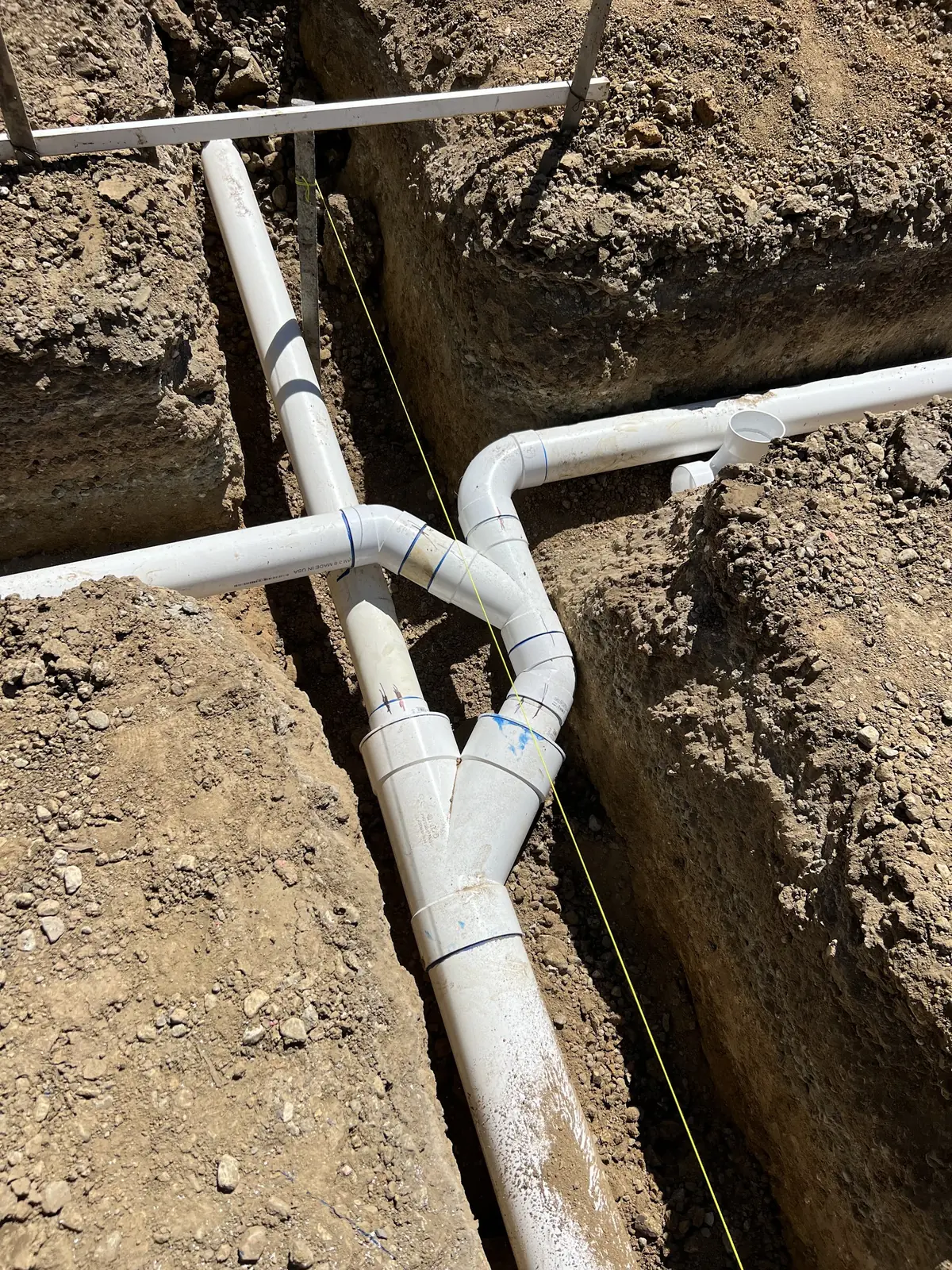
A French drain is a trench filled with gravel around a perforated pipe, lined with filter fabric to keep soil out. It collects water along its whole length, which makes it the tool for groundwater: a soggy strip below a slope, seepage toward a foundation, or soil that stays wet behind a wall. Pipe size and fall are set for each run, with the pipe sloping toward its outlet.
Area drains and catch basins for surface water
Surface water is rain that lands and runs. To catch it we set grated inlets at the low points of a yard or patio and connect them with solid pipe, so the water stays in the pipe until it reaches the outlet. Catch basins are the larger boxes with a sump in the bottom that traps leaves and silt.
Channel drains across driveways and patios
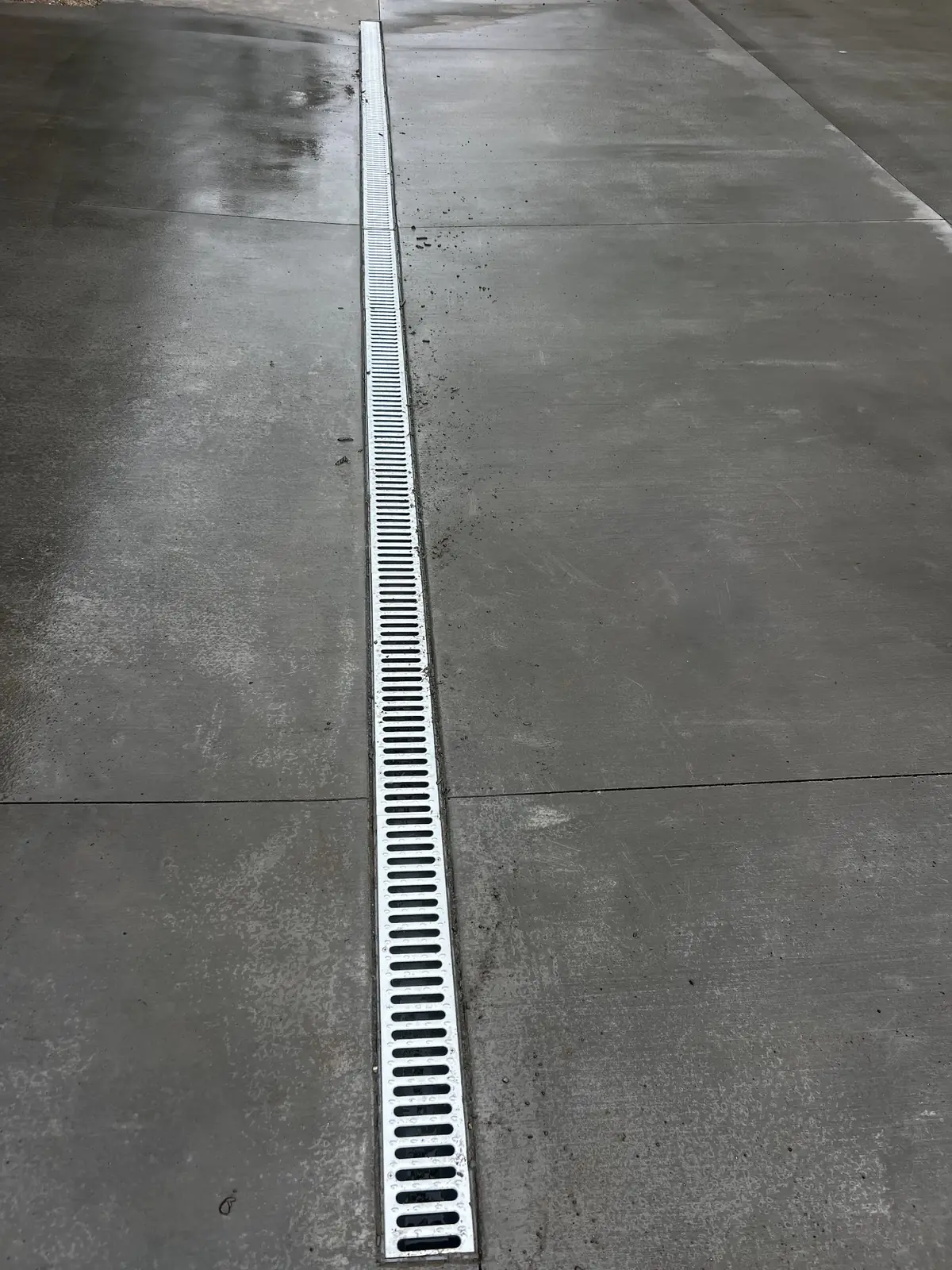
A channel drain, also called a trench drain, is a long narrow drain with a grate on top, set flush in concrete. It cuts off a sheet of water before it reaches a garage door, a threshold or the bottom of a sloped driveway. We set it as we pour, or saw cut an existing slab and concrete it in.
Downspout lines, sump discharge and regrading
Downspouts that empty at the foundation put roof water in the worst place, so we tie them into solid pipe with the yard drains. Where the outlet is higher than the yard, a sump pump can lift the water, which in the City of Los Angeles takes building department approval. Sometimes the fix is dirt work: the building code calls for the ground to fall at least 6 inches in the first 10 feet away from a foundation.
In A Rush? Let's Talk Now!
Why a concrete company specializes in drainage
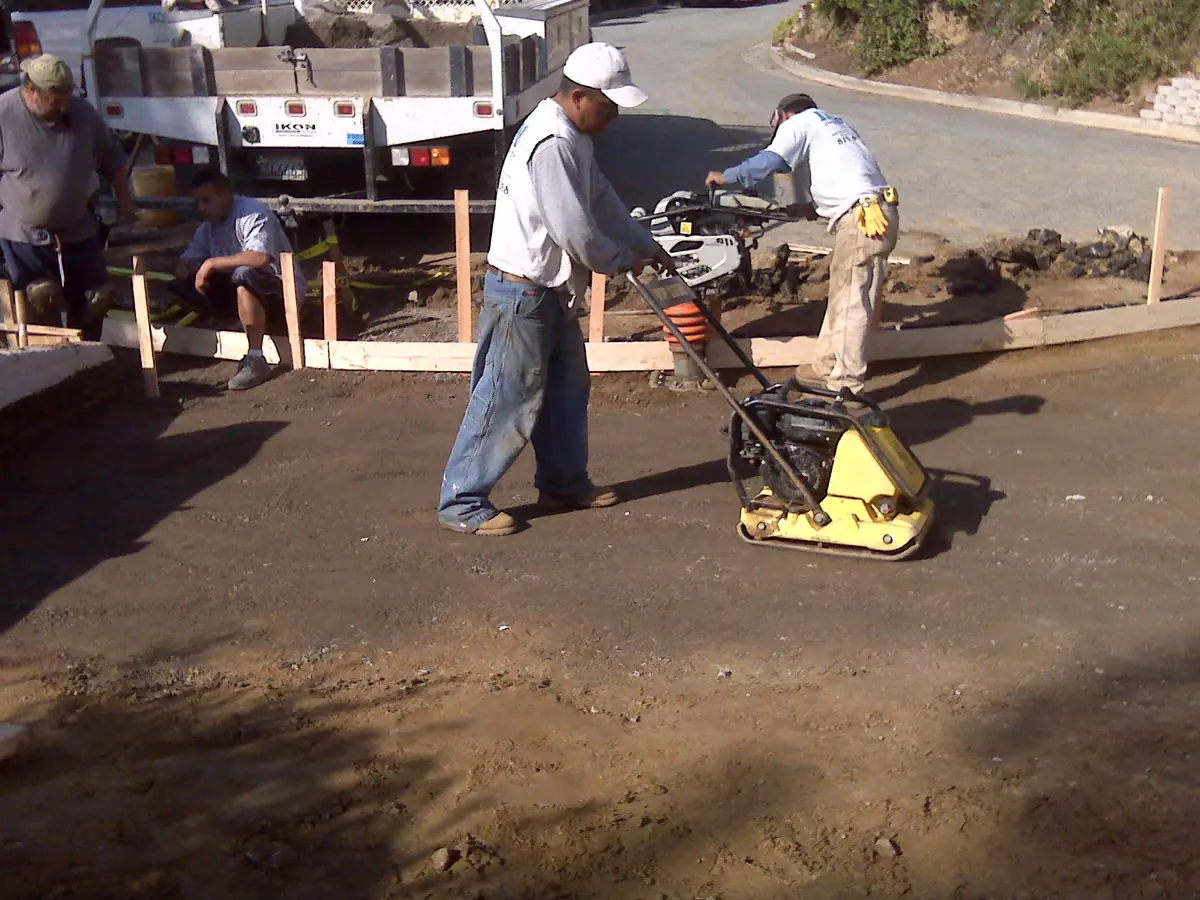
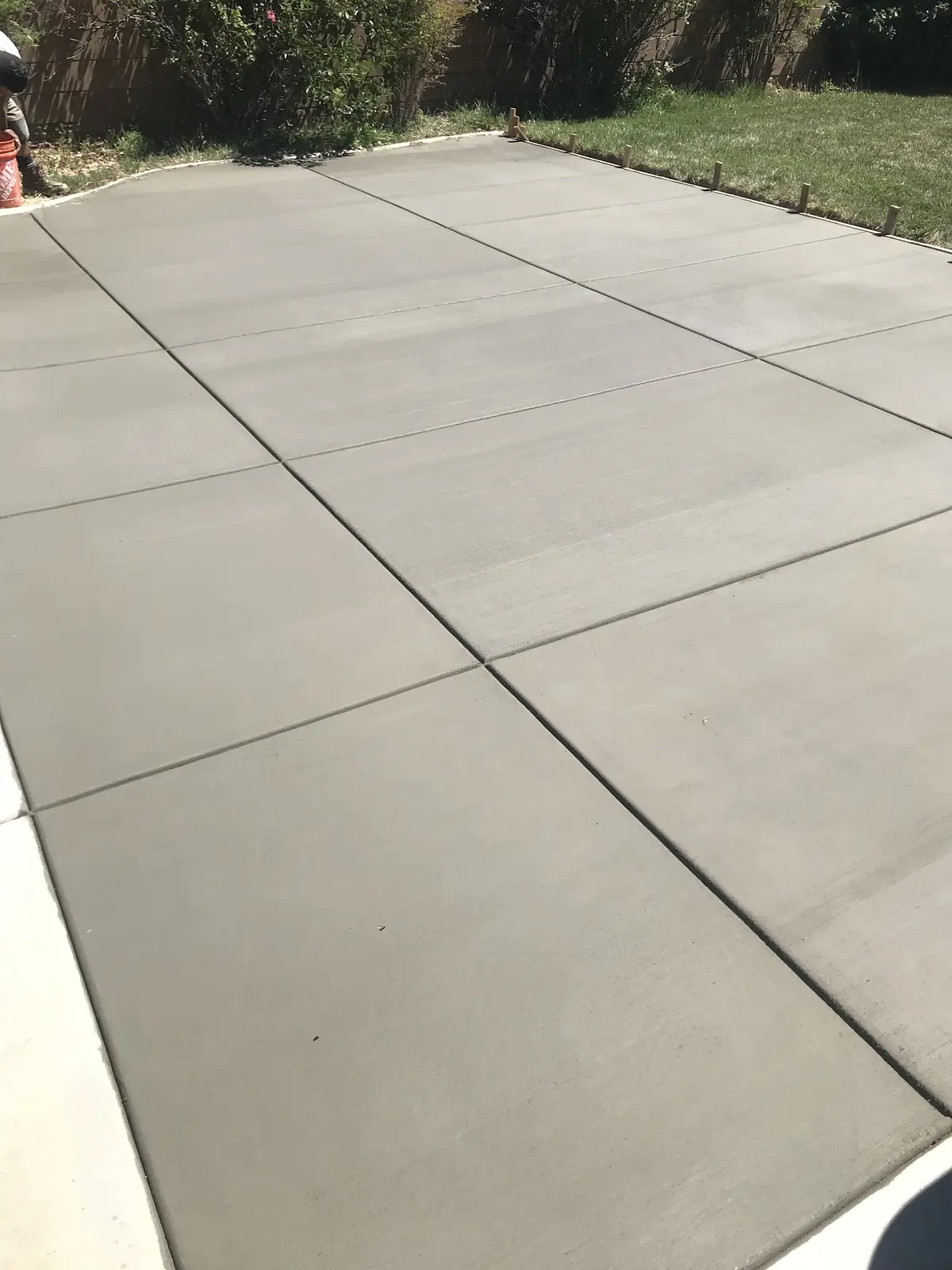
Most drainage problems we are called to are concrete or grading problems first: a patio pitched toward the house, a driveway that funnels the street into the garage, a wall with no way for water to get out. We have poured that kind of concrete and built those walls since 1999, which is why we tell customers drainage is our specialty.
Ikon is family owned, holds California license 770901 with the C-8 and B classifications, and runs a crew of eight. Gilbert Rico, the owner, walks the property with you and explains the plan before you spend anything. Estimates are free, and drainage jobs generally get going roughly two weeks after you approve the estimate.
Get a Free EstimateSigns your property has a drainage problem
- Water stands on the lawn, patio or driveway for more than a day after rain
- Soil, mulch or gravel washes onto walkways, or small channels are cut into a slope
- Water comes under the garage door or pools against the house
- A white chalky line or damp stain runs along the bottom of the stucco or a block wall
- Downspouts empty next to the foundation with no pipe to carry the water away
- A slab or wall near a spot that stays wet has started to tilt, sink or break
What sets the price of a drainage system
Three things set the price: how many feet of pipe, how deep it has to go to keep its fall, and what is on top of the route. A trench across open lawn is quick, and one under a driveway or patio means saw cutting, removal and new concrete.
A curb outlet adds a permit and sidewalk work, and a sump pump adds a basin, a pump and power. A deep drain along a foundation is more work than a shallow yard line, and every lot drains differently.
We do not quote drainage over the phone, because the fall of the lot decides the design. Send a message and a few photos through the contact page for a free estimate. If a patio or driveway is in your plans, bring us in first, because pipe is far cheaper to place before concrete than after.
How we lay out and install a drain system
- Find the water. We walk the lot, see where roof water, yard water and slope runoff end up, and shoot elevations with a level so the plan is based on measured fall.
- Find the outlet. The usual outlet is the street, through a pipe under the sidewalk and out the face of the curb, which is public right of way and needs a permit. Lots that sit lower than the street need a sump pump or another approved method.
- Lay out and mark. Inlets, pipe runs and cleanouts are marked, and buried utilities are located through 811 at least two working days before we trench.
- Trench and set pipe. Trenches are cut to a steady fall and checked against a string line, with the slope set by what the lot allows.
- Set inlets and channels. Basins and grates are set to finished grade and the soil or slab around them is shaped to feed them.
- Test and backfill. We run water through every inlet and watch it leave the outlet before the trenches are closed, then backfill, compact and patch any concrete we cut.
Related services. People who ask about drainage systems often need these too.
5.0 on Google
Read what a homeowner says about meeting Gilbert and talking through decorative concrete options.
Drainage in Santa Clarita and the San Fernando Valley
Family OwnedSince 1999
California contractor license 770901. C-8 Concrete and B General Building. Free estimates.Drainage Near You
We bring drainage systems to the cities below. Pick yours for local details.
Drainage In Three Easy Steps
Send A Message
Call, text or send the form with a few details, and photos if you have them. We reply the day we get it.
Step 1Free Estimate
We walk the site with you, measure, talk through finishes and drainage, and give you a price. No charge.
Step 2We Build It
Most jobs start about two weeks after you approve the estimate. We demo, form, pour, finish and haul off the mess.
Step 3
Drainage Questions, Answered
A French drain collects water from the soil through a perforated pipe bedded in gravel. An area drain collects water from the surface through a grate and carries it in solid pipe. Many yards need both, run to one outlet.
In the City of Los Angeles, the building code requires roof drainage from new construction and site drainage from graded pads to be carried to the street, a natural watercourse or an approved drainage facility, as LADBS Information Bulletin P/BC 2026-057 explains. You may not regrade or pipe your lot in a way that sends more water onto a neighbor.
Yes, for the outlet, because the curb and sidewalk are public right of way. The City of Los Angeles handles curb drains under a Bureau of Engineering A-Permit, Los Angeles County requires a road permit to cut or rebuild curb, gutter and parkway drains, and Santa Clarita requires an encroachment permit for work in the right of way.
That is the job a channel drain is built for. Water at a garage door usually comes down the driveway, so a channel drain across the driveway in front of the door catches it first. If the slab also slopes the wrong way, we may recommend replacing that section of concrete driveway.
They can. Fine soil washing into the gravel is what stops a French drain, which is why the trench is lined with filter fabric and filled with clean washed rock. We install cleanouts so the pipe can be flushed or snaked.
Have the flow paths looked at before the first big storm. The National Weather Service says burned soil can shed rain almost like pavement, and that about half an inch in an hour can be enough to start flooding and debris flows. A yard drain is sized for ordinary runoff, not a debris flow, so also ask your city or county about sandbags and barriers.
Ready To Talk About Drainage?
Family owned since 1999. California license 770901. Free estimates.