
What Sets the Cost of a Concrete Driveway in Los Angeles?
Short answer. The price of a concrete driveway in Los Angeles comes from the lot, not a chart. Size, how the trucks and crew reach the work, tearing out and hauling off the old slab, base and grading, steel, the finish you pick, drainage, and any plans, permits or HOA approval all change the number. That is why we price every driveway at a free on-site estimate.
Nobody can price a driveway from a search result, and that includes us. Two driveways the same size on the same street can come in far apart because of what sits under them, around them and between them and the curb. Below is what moves a real Los Angeles job up or down, so you know what we are looking at when we walk your lot and what to line up when bids come in. We do not publish prices. Ours come from a free on-site estimate.
Why the price starts at your lot
Online price guides work from averages, and the ones we read in November 2026 did not agree with each other. None of them has seen your slope, your soil, your gate or the curb in front of your house. Every job is different, and a number that skips those things tends to move once someone shows up with a tape measure. We would rather give you one price after we have seen the work.
Size and finish
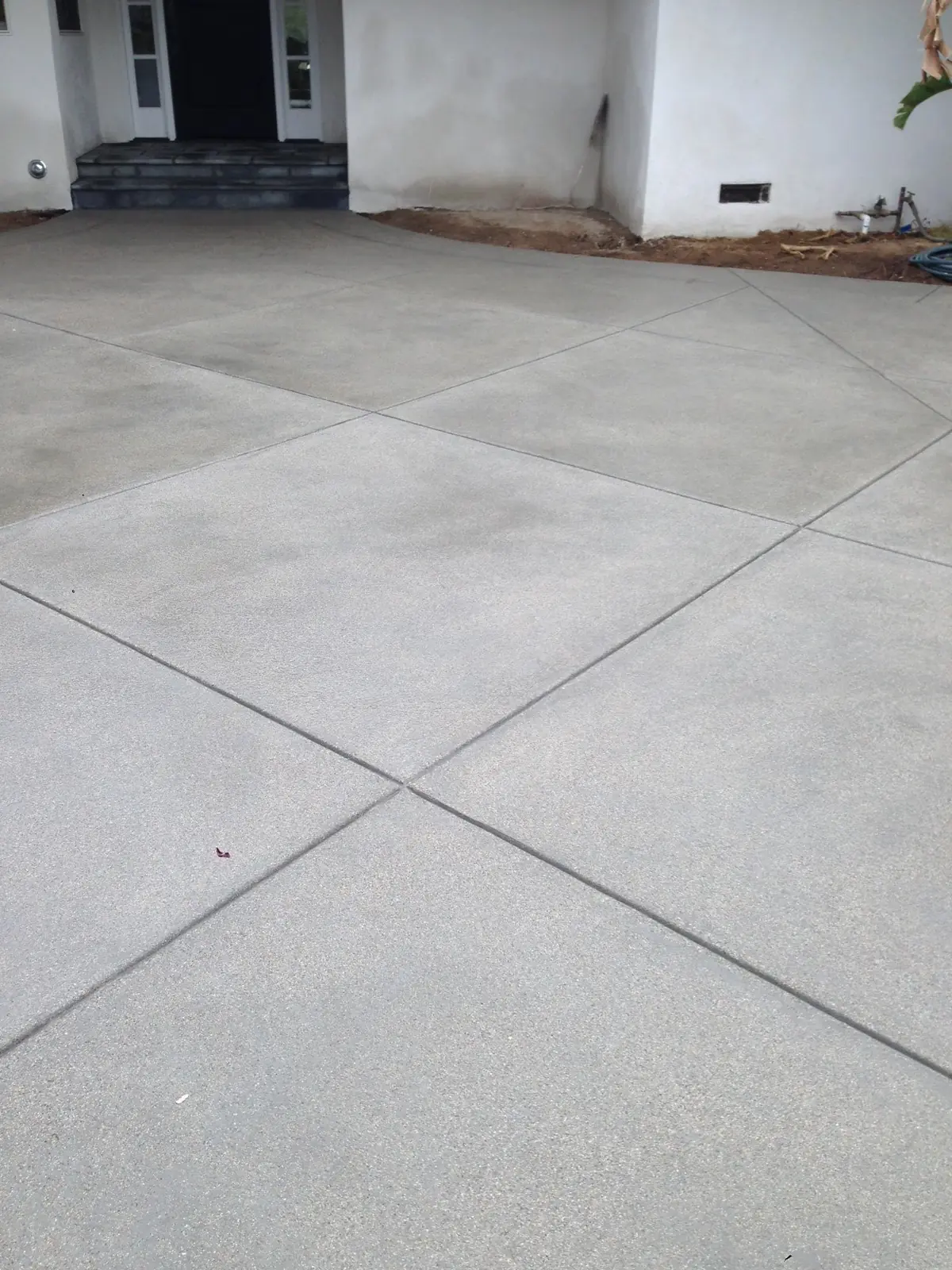
Square footage is the starting point, because it sets how much concrete, base and forming the job takes. Concrete Network calls 16 by 40 feet the average two-car driveway in the United States, and plenty of Los Angeles driveways are narrower, longer or split around a walk. Shape counts too. A straight rectangle forms faster than a driveway that curves, flares at the garage or steps down a slope, and every extra edge is more form board and more hand finishing.
Finish is the one part of the price you choose. Concrete Network sorts driveways into tiers that climb from plain gray with a broom finish, to basic decorative work such as one color, exposed aggregate or a simple border, to stamping or scoring with stain, and then to hand-applied stain accents and saw-cut designs. A border, a second color or a hand-applied stain each add steps and crew hours. Our stamped concrete page shows the patterns we pour.
What moves a Los Angeles driveway up in price
The lot decides most of it.
Tear out and haul off
A replacement starts with breaking out the old slab, loading it and hauling it away. Concrete Network lists tear out as a cost separate from the new slab, so check whether a bid includes it. Rebar or mesh in the old slab, extra thickness and a long carry to the truck all add hours. Our demolition and hauling page explains how that part of the job runs.
Base and grading
Before new concrete goes in, the ground is cut to grade and the base under the slab is prepared. Soft spots, old fill or roots that show up once the old slab is out can mean more digging and more base material, and a driveway that has to change its slope to drain takes more grading. HomeGuide notes that many driveway contractors fold grading into the driveway price, so ask whether yours does.
Steel
Rebar or mesh adds material and labor. Whether a driveway gets steel, which kind and how it is laid out depends on the site, what will drive on it and any plans the city requires, so it is set for each job. Ask each bidder what steel the price includes.
Plans, permits and the driveway approach
The sloped piece between the street and your property line is public right of way. In the City of Los Angeles, work on it needs a Class A permit from the Bureau of Engineering. The Bureau's permit manual lists new driveway installation and driveway repair among the work an A permit covers, built to City Standard Plan S-440-4 and inspected.
Beyond the permit itself, the manual adds conditions that can grow the job. The forms have to leave a 30 by 36 inch opening around a water meter box. A street light within 5 feet of a new approach has to be relocated. An abandoned approach on the same lot has to be closed with full-height curb and sidewalk before a permit for new work is valid. Width is capped too: on a residential lot the apron runs 10 feet minimum and 18 feet maximum along the curb under Los Angeles Municipal Code section 62.105.2, and anything wider needs a deviation from the Bureau.
Other jurisdictions have their own version. The City of Santa Clarita requires an encroachment permit for all work in the public right of way and inspects concrete forms one hour before the pour. Unincorporated Los Angeles County requires a Road Construction Permit for driveways, sidewalks, curbs and gutters. Burbank, Glendale, Pasadena and the other cities each run their own counter, so confirm with your own public works department before work starts.
Access
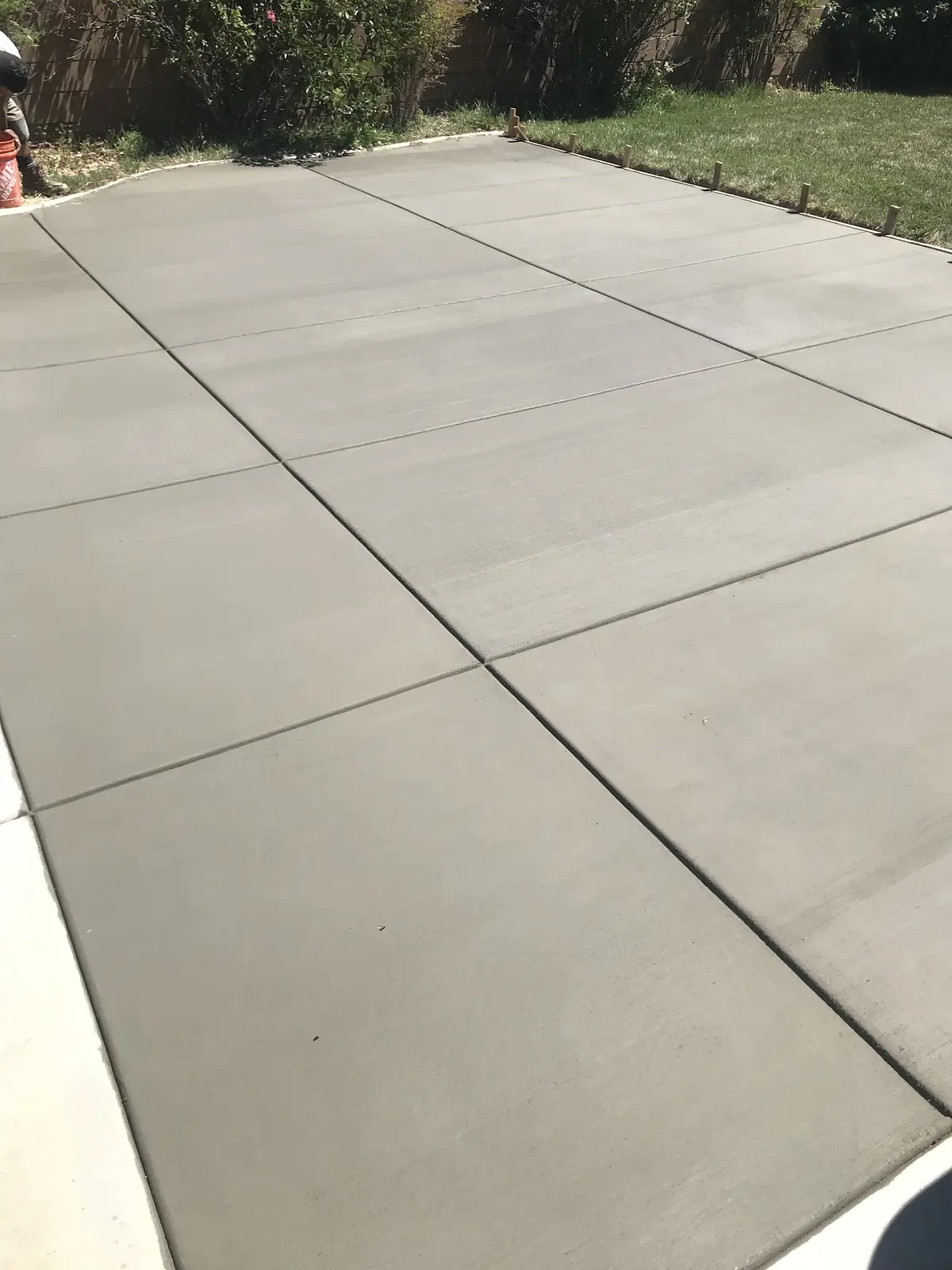
A ready-mix truck that can back up to the forms is the simplest way to place concrete. When it cannot reach, because of a narrow street, a gate, low wires or a long run to a rear garage, the concrete goes in by pump or wheelbarrow and the broken slab comes out by hand or small machine. That is more labor on both ends of the job.
Slope and drainage
Concrete Network lists steep slopes, curves and special drainage among the site conditions that raise a driveway's price. On a hillside lot the forming takes longer, the concrete is harder to place and finish, and runoff has to be caught before it reaches the garage. A flat lot can need drainage work too, when water off the roof or the yard already sits where the new slab will go. See drainage systems and grading and hillside work.
HOA rules
If your home is in a homeowners association, read its rules before you settle on a finish. An association can have a say in driveway color, pattern, width or material, and some want plans submitted and approved before work starts. Ask the HOA what it needs, and leave room in the schedule for its review.
How to compare driveway bids
Line the bids up item by item. Two prices can sit far apart because one of them leaves something out.
- Size. The square footage each bidder measured, and whether it covers the approach, walks and landings.
- Thickness and steel. Both should be set for your site and its plans. Ask what each bid includes, whether rebar or mesh is part of it and how the steel is held up off the dirt.
- Demolition and hauling. Included in the price, or a separate line?
- Grading and base. Part of the driveway price, or extra?
- The approach. Angi's guide lists the driveway apron as its own item, so check whether each bid includes it.
- Plans and permits. Who pulls the permit, and whether the fee and any drawings are in the price.
- Finish and sealer. Pattern, color method and number of colors, in writing.
Ask every bidder whether the price includes the driveway approach and its permit. In the City of Los Angeles that piece needs a Class A permit from the Bureau of Engineering and an inspection, and leaving it off is the easiest way to make a bid look low.
What we look at during the free estimate
We come to the property, measure the driveway and look at the things above: how the old slab comes out, where a truck can reach, the slope and where water goes, the finish you have in mind, and whether the city or an HOA has a say. The price we give is for that driveway, under those conditions.
Where Ikon fits in
We pour and replace concrete driveways across the San Fernando Valley, the Santa Clarita Valley and Los Angeles north of downtown. Estimates are free and done at your property: call or text (818) 464-5763, or send a message with the address and a few photos.
More questions
A 20 by 40 foot driveway is 800 square feet, a little larger than the 16 by 40 foot size Concrete Network calls the average two-car driveway. What it costs depends on whether an old slab has to come out, how the trucks reach it, the base and grading, steel, the finish, and whether the approach and its permit are part of the job. We measure it and price it at a free on-site estimate.
To install, usually. Concrete Network's cost guide puts asphalt below plain gray concrete. How long either one holds up depends on the base under it, drainage and upkeep, so weigh them over the years you plan to stay and not only on the day they go in.
Not always, so ask. In the City of Los Angeles the approach in the public right of way needs its own Class A permit from the Bureau of Engineering, with an inspection. We check at the estimate whether your job needs one.
Related services
Written by the Ikon Concrete Design team in Sylmar, California. Ikon Concrete Design is a family owned concrete contractor run by Gilbert Rico since 1999, California license770901. This article is general information. Codes, fees and prices change, so check with your building department and get an on-site estimate before you plan around a number.
Concrete contractor in Santa Clarita and the San Fernando Valley
Family OwnedSince 1999
California contractor license 770901. C-8 Concrete and B General Building. Free estimates.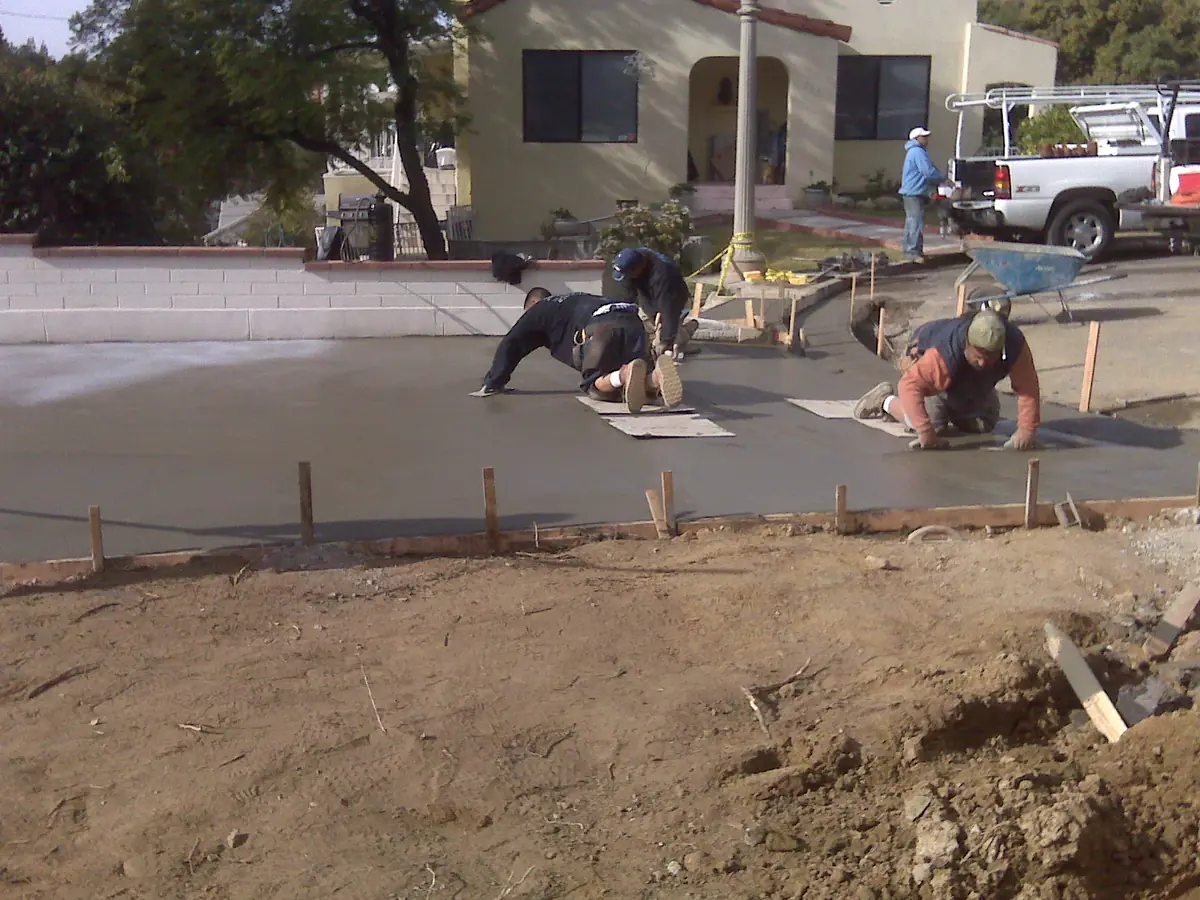
Get Your Concrete Poured In Three Easy Steps
Send A Message
Call, text or send the form with a few details, and photos if you have them. We reply the day we get it.
Step 1Free Estimate
We walk the site with you, measure, talk through finishes and drainage, and give you a price. No charge.
Step 2We Build It
Most jobs start about two weeks after you approve the estimate. We demo, form, pour, finish and haul off the mess.
Step 3
Ready For Your Concrete Project?
Family owned since 1999. California license 770901. Free estimates.