
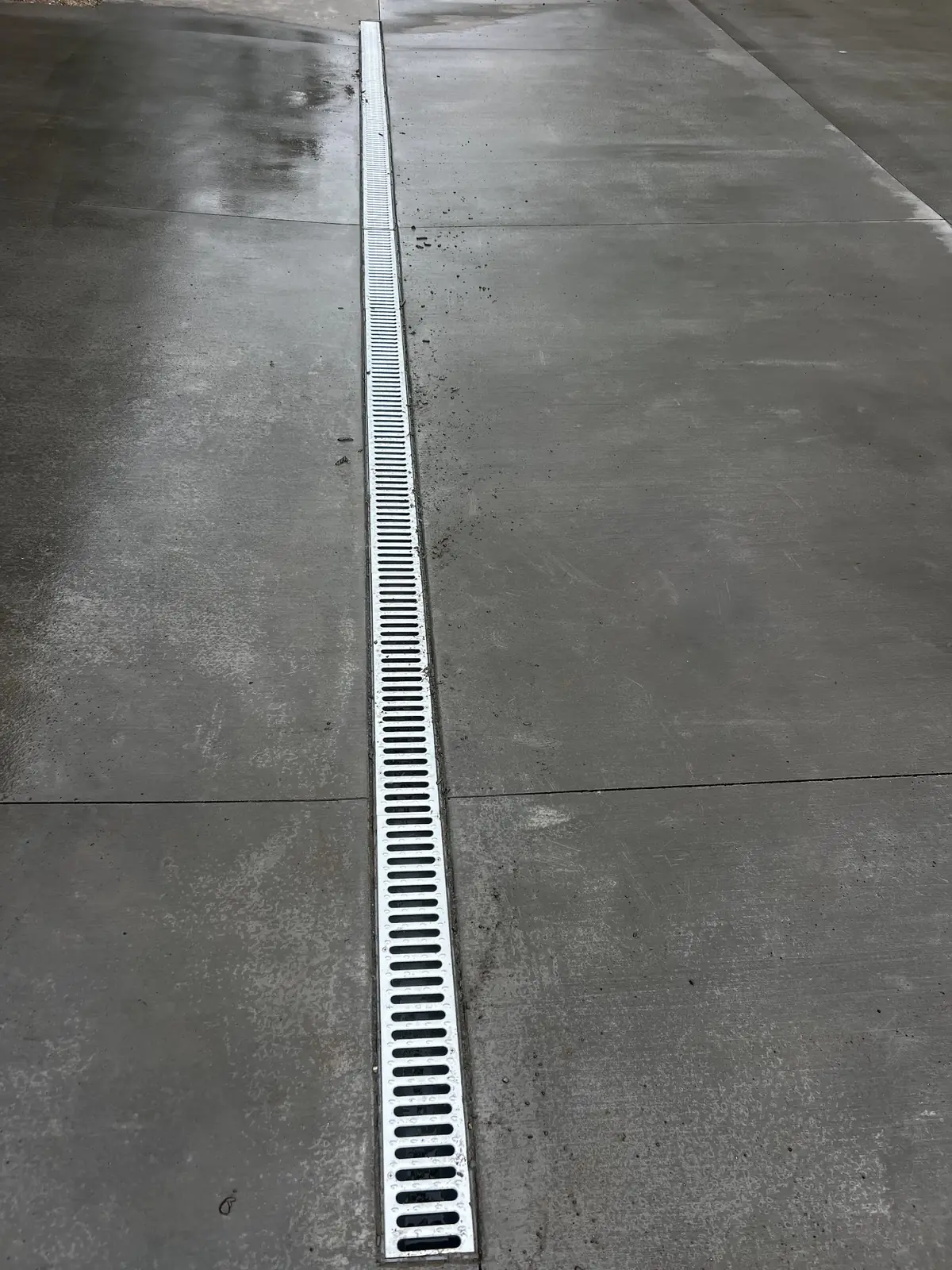
French Drain vs Channel Drain: Which One Fixes Your Yard?
Short answer. A French drain is a gravel trench with a perforated pipe that collects water soaking through the soil along its whole length. A channel drain is a grated trough set in concrete that catches water running across a hard surface. Soggy ground that stays wet calls for a French drain. Water sheeting toward a garage or door calls for a channel drain.
Drainage is the work we specialize in, and the first question on every job is the same: is the water in the ground, or on top of it? The two drains in this article are built for opposite answers. Put the wrong one in and the yard floods just as it did before, with a new trench scar across it.
What is the difference between groundwater and surface water?
Surface water is rain that lands and runs. It moves fast, across concrete, down a driveway, off a slope, and it is gone a few hours after the storm. Groundwater is rain that soaked in. It moves slowly through the soil, collects where the soil is tight or the ground is low, and keeps an area wet for days.
NDS, the drainage manufacturer, puts the difference between the two drains this way: a French drain collects water over the entire length of the drain, where a surface drain collects it at one spot. A channel drain is a surface drain stretched into a line.
How do you tell which problem you have?
Go outside twice: once during a hard rain and once the next day.
- During the rain. If you can watch water travel across the driveway or patio toward the garage, a door or the foundation, that is surface water.
- The day after. If the lawn squishes, a planter stays muddy or a strip along a wall is still dark while the concrete is dry, that is water in the soil.
- Where it sits. NDS suggests siting a French drain by watching where water pools after rain, especially where it sits for hours or days.
- Below a slope or behind a wall. Seepage at the foot of a hill, or damp block on a retaining wall, is groundwater pushing sideways.
- Both. Many lots have both. Roof and patio runoff floods the surface, and a low back corner stays soaked. Those yards need both drains tied to one outlet.
French drain vs channel drain, side by side
| French drain | Channel drain | |
|---|---|---|
| Water it handles | Water in the soil, and slow surface water that soaks into the gravel | Water running across concrete, asphalt or pavers |
| How it collects | Along its whole length, through gravel into a perforated pipe | Through a grate into a narrow trough |
| Where it goes | Lawns, planters, the foot of a slope, along a foundation, behind a wall | Across a driveway, in front of a garage door, at a patio threshold, along a pool deck |
| Main parts | Trench, filter fabric, gravel, perforated pipe, solid outlet pipe | Channel sections, grate, end caps, outlet fitting, concrete surround, solid outlet pipe |
| Slope | NDS: at least 1 percent, and some recommend 2 percent for corrugated pipe | NDS: at least 1 percent, with 2 percent performing better on most homes |
| What you see when it is done | Lawn or gravel. The drain is buried | A grate flush with the slab |
| What stops it working | Fine soil clogging the gravel | Leaves and silt in the channel, or a grate too light for the traffic |
What goes into each drain?
French drain
The trench is lined with filter fabric, which keeps dirt out of the gravel. A perforated pipe goes in the bottom, clean gravel goes around and over it, and the fabric is folded over the top like a wrapper before soil or sod goes back. NDS says a 4 inch perforated pipe is likely adequate for most residential work, and that 8 inches to 2 feet of depth covers many yards, with deeper trenches along foundations and at the base of retaining walls.
Clay is the enemy. NDS notes that clay clogs a French drain by filtering fine particles into the gravel until the gaps fill. Skip the fabric in clay soil and the drain slowly plugs.
Channel drain
A channel drain is set in concrete, which is why a concrete crew installs it. NDS's instructions for a driveway call for a trench deep enough for the drain body plus a 4 inch concrete base, concrete fully surrounding the body, and the grate set about 1/16 to 1/8 inch below the surface around it so water falls in and tires roll over.
The grate has to match the traffic. NDS sells channels with grates rated only for foot traffic, meant for patios and walks, and tells installers to use a load rating suited to the expected traffic. We set the channel when we pour a new driveway or patio, or saw cut an existing slab and concrete it in.
Catch basins
A catch basin is the third piece: a box with a grate at a low spot, for surface water that collects at a point and not along a line. Basins, channels and French drains usually share one run of solid pipe to the outlet.
Where is the water allowed to go?
To the street or another approved outlet, not onto the neighbor. This matters more than which drain you pick, because a drain with no legal outlet only moves the puddle.
In the City of Los Angeles, Department of Building and Safety bulletin P/BC 2026-057 says the building code requires roof drainage from new construction and site drainage from graded pads to be conveyed to the street, a natural watercourse or an approved drainage facility. It also says runoff may not be altered in a way that increases the quantity discharged onto neighboring properties. Sump pumps and dispersal walls need department approval, and piping water across a property line takes a recorded drainage easement from the downstream owner.
The usual outlet is a pipe through the curb, and the curb is public right of way. Santa Clarita requires an encroachment permit for all work in the public right of way. Los Angeles County requires a Road Construction Permit for curb drains in county areas. Rules differ in every city, so confirm the outlet with your own building or public works department before anyone digs.
Decide the outlet first. Before you pay for any drain, ask where the pipe ends and whether that discharge point is approved. If the answer is the back fence or a hole full of gravel, the plan is not finished.
What are the common mistakes?
- A French drain where a channel drain belongs. Water crossing a driveway in a storm moves too fast to soak into a gravel strip. It needs a grate.
- A channel drain in a soggy lawn. A grate only catches water that reaches it across the surface. It does nothing for water held in the soil.
- Too little fall. Both drains need at least 1 percent slope by NDS guidance, which is 1 inch of drop every 8 feet. Flat pipe holds water and silt.
- No fabric, or dirty rock. Fines wash in and plug the gravel.
- A patio grate in a driveway. A grate rated for foot traffic will not carry vehicles.
- No cleanout and no cleaning. NDS recommends checking channel grates for debris every quarter, and more often when leaves drop.
We lay out and install drainage systems from Sylmar across the San Fernando Valley and Santa Clarita. Estimates are free: call or text (818) 464-5763 or send photos through the contact page.
More questions
Yes, and on most yards they should. Each drain collects its own kind of water, then solid pipe carries all of it to one approved outlet. NDS notes that channel drains can be connected into other drainage systems, French drains included.
That is a dry well, and it only works where the soil soaks water up faster than the storm delivers it. In clay it fills and stays full. In the City of Los Angeles, drainage from new construction has to reach the street, a natural watercourse or an approved drainage facility, so ask your building department before relying on a gravel pit.
It can clog, and it is slow. Fine soil plugs the gravel if the trench is not wrapped in filter fabric, and a French drain cannot keep up with water sheeting off concrete in a downpour. It also needs somewhere lower to drain to, which flat lots do not always have.
If the driveway slopes toward the garage, usually yes. NDS says to place a channel drain where it intercepts sheet flow just before the water reaches a garage door or foundation wall. If the driveway slopes to the street and the garage still gets wet, look at the slab and the downspouts first.
Related services
Written by the Ikon Concrete Design team in Sylmar, California. Ikon Concrete Design is a family owned concrete contractor run by Gilbert Rico since 1999, California license770901. This article is general information. Codes, fees and prices change, so check with your building department and get an on-site estimate before you plan around a number.
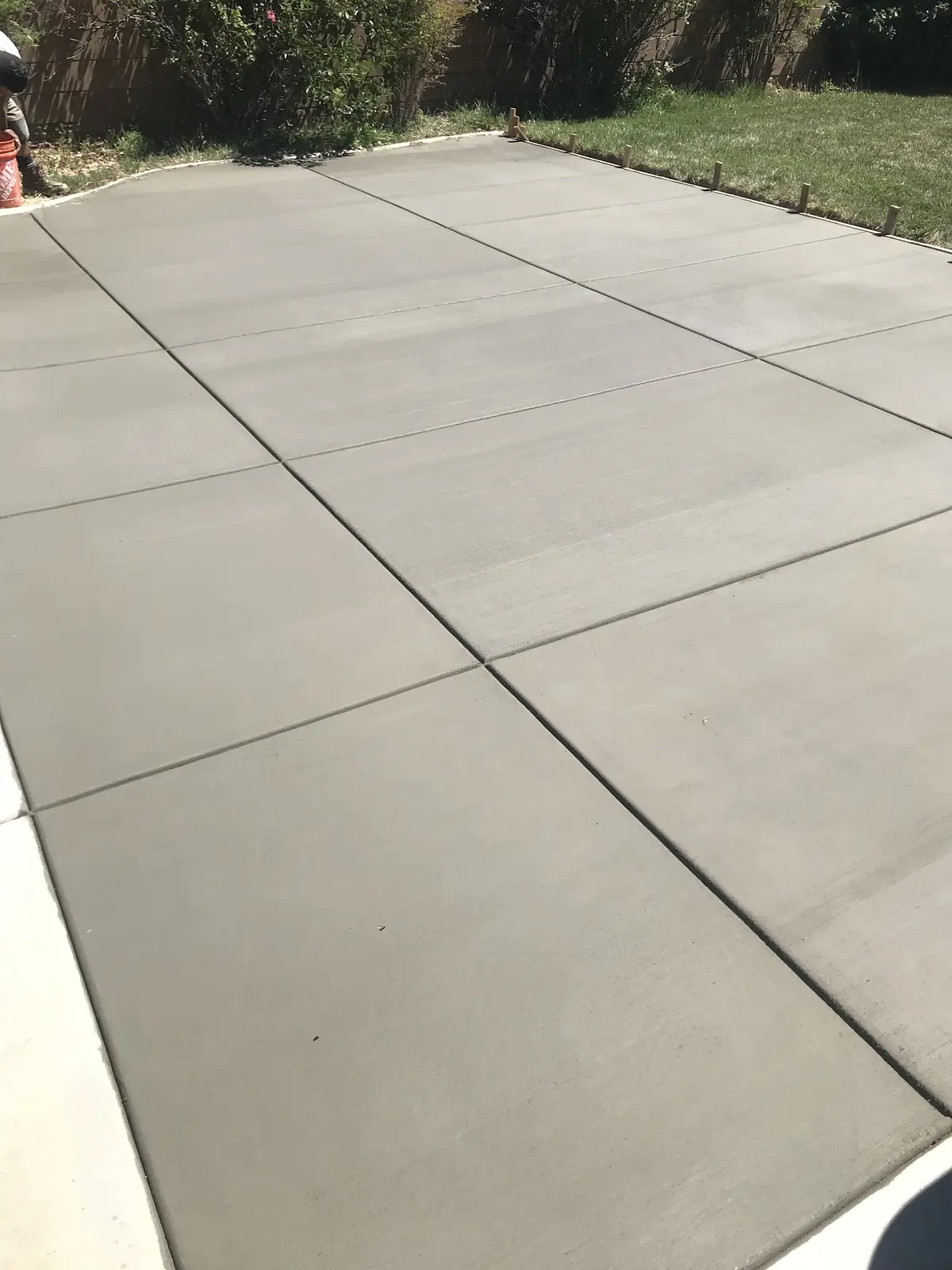
Concrete contractor in Santa Clarita and the San Fernando Valley
Family OwnedSince 1999
California contractor license 770901. C-8 Concrete and B General Building. Free estimates.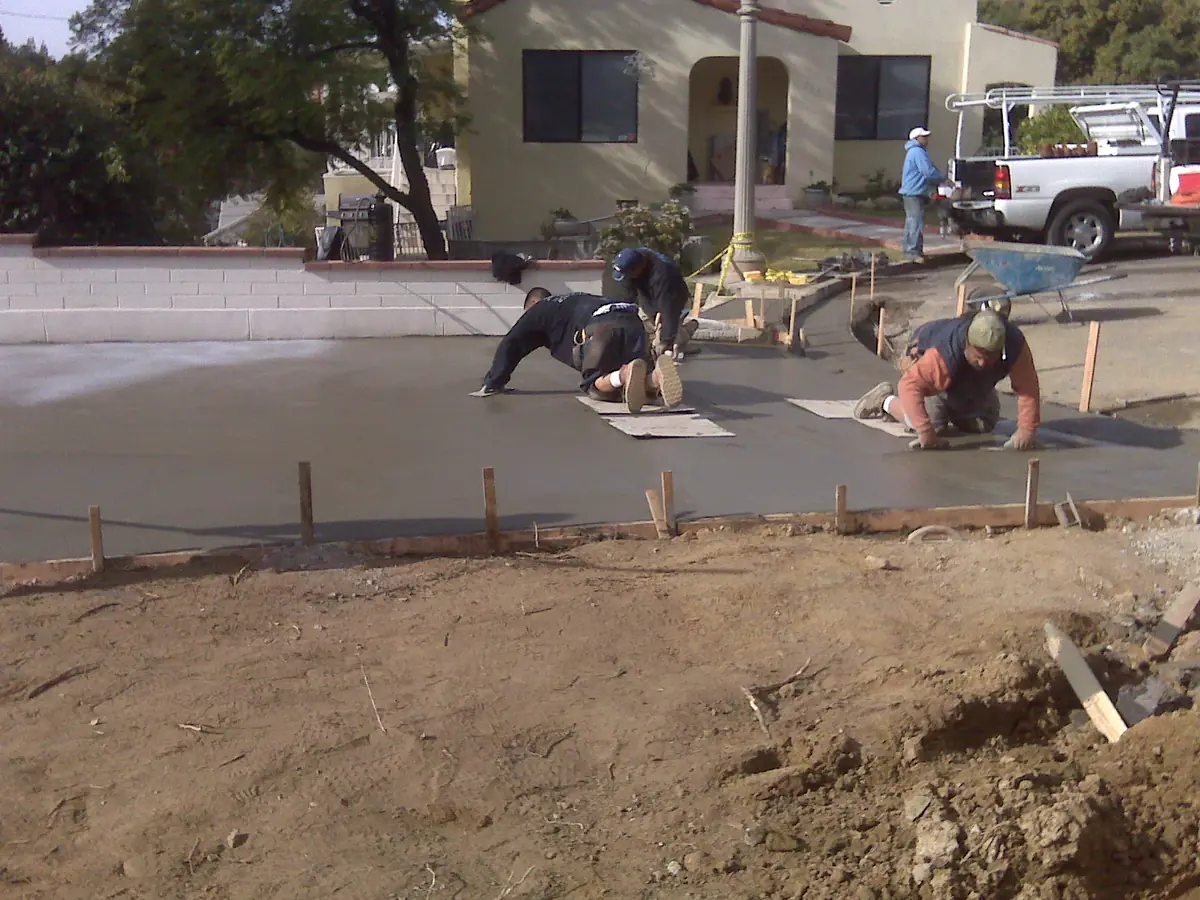
Get Your Concrete Poured In Three Easy Steps
Send A Message
Call, text or send the form with a few details, and photos if you have them. We reply the day we get it.
Step 1Free Estimate
We walk the site with you, measure, talk through finishes and drainage, and give you a price. No charge.
Step 2We Build It
Most jobs start about two weeks after you approve the estimate. We demo, form, pour, finish and haul off the mess.
Step 3
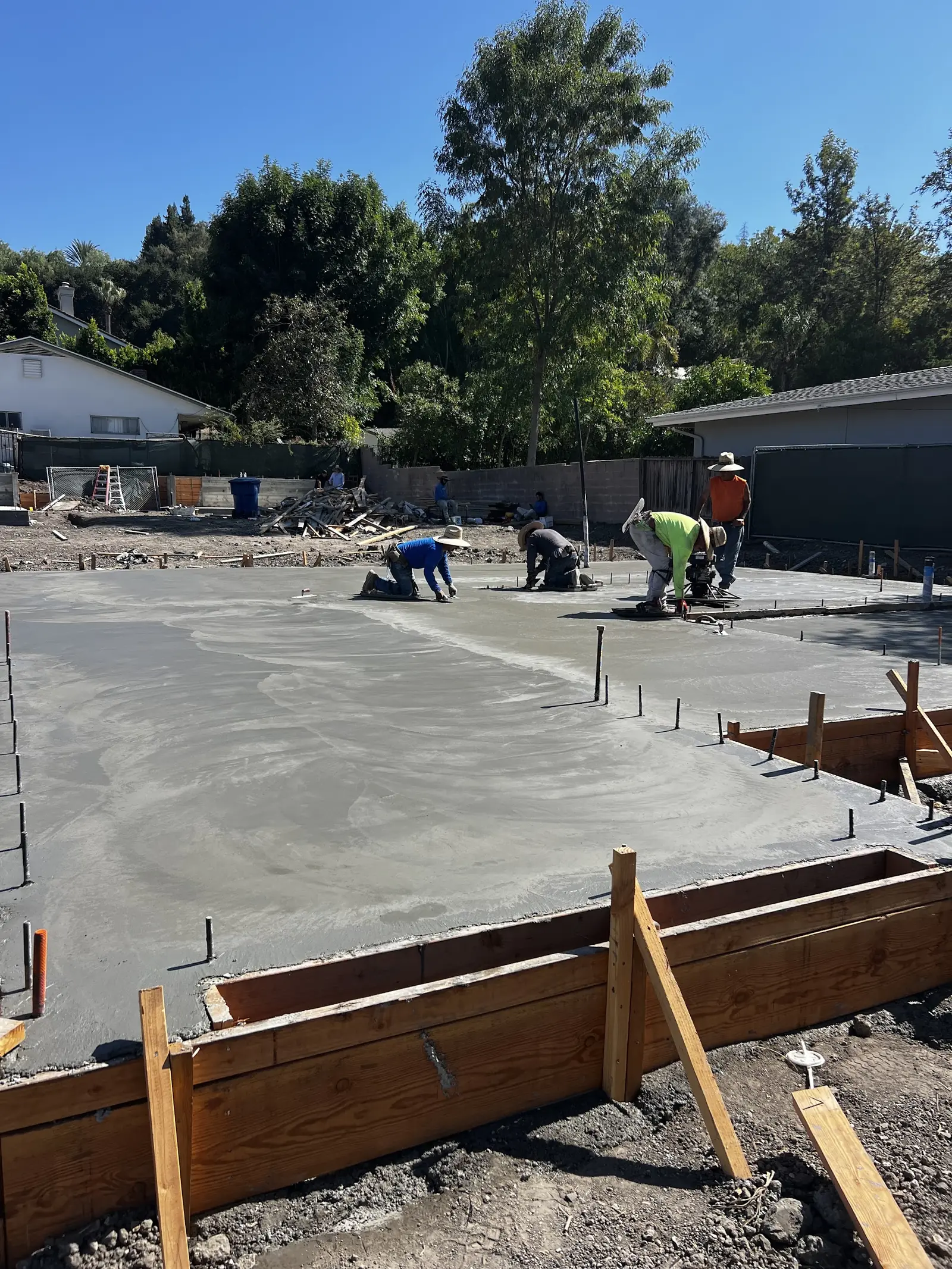
Ready For Your Concrete Project?
Family owned since 1999. California license 770901. Free estimates.