
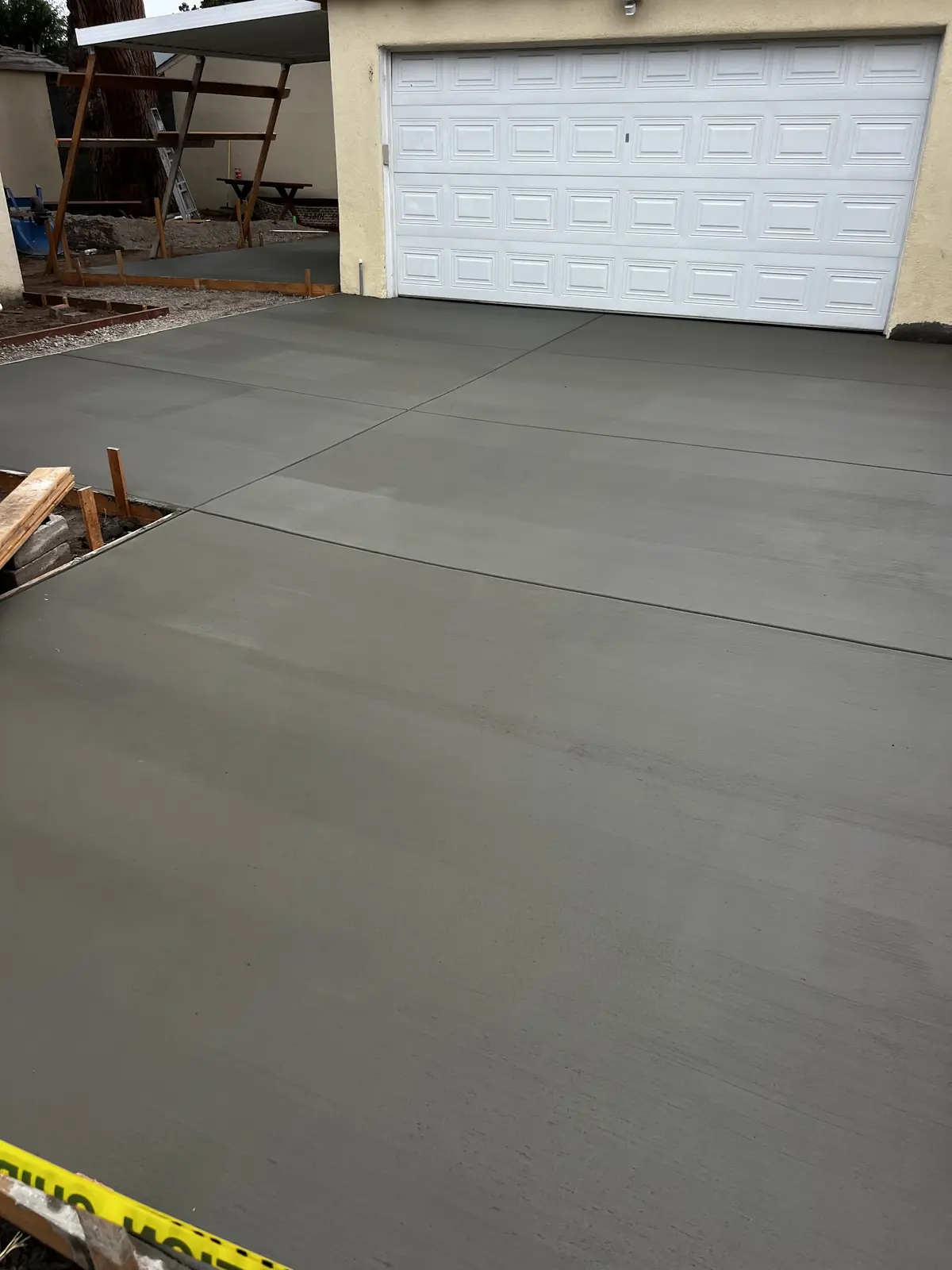
Los Angeles, CAConcreteDriveways
Driveways for Los Angeles homes and businesses, from a family owned crew based in Sylmar.
Concrete Driveways in Los Angeles, CA at a glance
- Service
- Concrete Driveways in Los Angeles, CA
- County
- Los Angeles County
- Building department
- LADBS on private property; Bureau of Engineering (A-Permit) in the public right-of-way
- ZIP codes
- 90026, 90027, 90028, 90038, 90039, 90041, 90042, 90046, 90049, 90065, 90068, 90077, 91604
- Estimate
- Free, on site
- Typical start
- About two weeks after you approve the estimate
- Phone
- (818) 464-5763
- License
- California 770901, C-8 Concrete and B General Building
Last updated November 2026
Driveways in Los Angeles, CA
Concrete Driveways in Los Angeles: Approach, Permit and Slope
We pour and replace concrete driveways in Los Angeles north of downtown, from flat Valley lots to steep drives in the Hollywood Hills, Silver Lake and Bel Air. A Los Angeles driveway is really two jobs. The slab on your lot follows the zoning code. The approach, the piece that crosses the parkway and sidewalk to reach the street, sits in the public right of way and needs an A-Permit from the Bureau of Engineering.
This page explains both sets of rules. Thickness, steel and joints are chosen for each site and any plans it has, and the general build is on our concrete driveways page. Ikon Concrete Design is family owned and has poured driveways since 1999. For a free estimate, send the address and a photo of the existing driveway through the contact page or call (818) 464-5763.
The A-Permit for the driveway approach
A new, widened or rebuilt driveway approach in the City of Los Angeles needs a Class A permit from the Bureau of Engineering. The application is made online, and the bureau checks it against Standard Plan S-440-4 and the Municipal Code before issuing it. On a street the 2035 Mobility Plan classes as an Avenue or Boulevard, the Department of Transportation has to accept the approach first. A state highway goes to Caltrans. Its permit manual lists what stops or changes a permit:
- An approach inside a corner curb return, or within 5 feet of a street light
- An apron that would extend in front of the neighbor's lot without that owner's consent
- An abandoned driveway on the property, which must be closed with full height curb and sidewalk before a new permit is valid
- A water meter box in the approach, which brings in the Department of Water and Power
- A street tree in the way, which goes to the Urban Forestry Division before any root is cut
On your lot: width, paving and the 20 percent slope limit
Behind the property line the driveway answers to section 12.21 A.5 of the Municipal Code. A driveway serving a house must be at least 9 feet wide. On an R1 lot outside the Hillside Area, its width at the front property line cannot exceed 25 percent of the lot width or the width of the driveway already there, whichever is greater. The code's floor for concrete paving is 3 inches. The thickness we pour is set for each driveway, its soil and the vehicles that will use it.
Slope is the limit that shapes hillside jobs. No driveway may be steeper than 20 percent, which is 2 feet of rise in 10 feet of run, and the transitions at the top and bottom have to follow standards set by the Department of Building and Safety and the City Engineer. Where the garage sits well above or below the street, that rule decides the driveway's length and where it has to curve, and sometimes it means grading before any forms go down.
Hillside streets with no curb, and pouring on a slope
Many hillside streets north of downtown were never finished with curbs, and the city handles their driveway approaches differently. Where the street is paved but has no curb, the Bureau of Engineering's manual does not permit a concrete approach. The apron goes in as asphalt, the owner signs a recorded waiver, the city treats it as a temporary improvement, and a revocable permit is required along with the A-Permit. A street edged with an asphalt berm is processed as a deviation from city standards. Our concrete starts at the property line on those lots.
A steep drive is also poured differently from a flat one. The mix is usually ordered stiffer so it holds on the grade, the surface gets a coarse broom texture pulled across the slope to help tires grip, and a channel drain at the low end can catch runoff headed for the garage or the street, tied into the lot's drainage system.
What a Los Angeles driveway job involves, and what moves the price
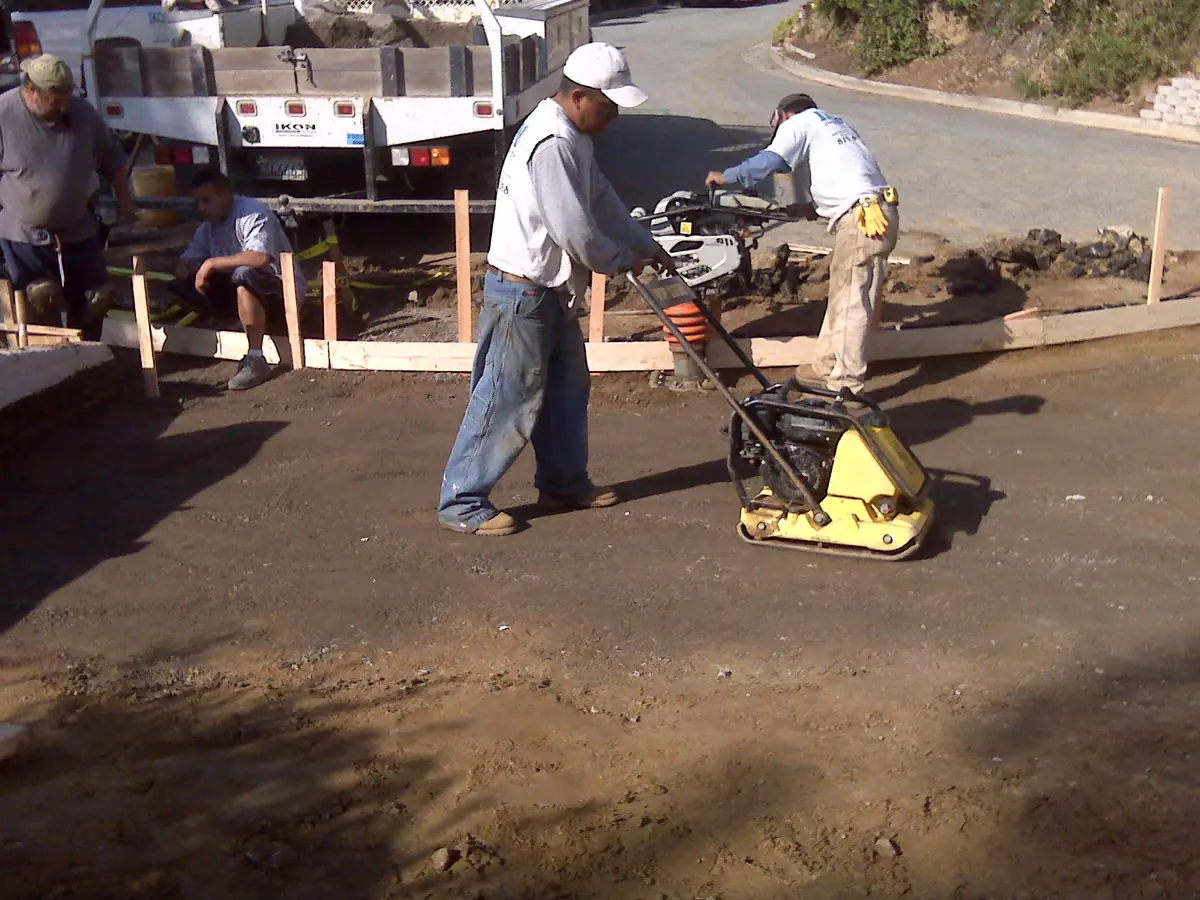
The usual job is replacing a driveway as old as the house. Once the slab is broken out we often find thin concrete poured straight on dirt with no steel, roots from a parkway tree, and a trench or two patched after plumbing work. Our own crew does the demolition and hauling, fixes the base, then pours the lot slab and the approach, and the city inspects the approach.
We will tell you at the estimate what your approach needs from the city. Most jobs start about two weeks after you approve our price, which is free and given on site. In Los Angeles it moves with:
- The approach: permit fees, the standard plan and any sidewalk panels that must be replaced with it
- Slope, which can mean pumping the concrete and placing it in shorter sections
- Demolition and hauling from a street with little room to park a truck
- Square footage, thickness and finish
Driveways in Los Angeles. Call or text (818) 464-5763 for a free estimate. Read more about ourconcrete driveways work or about concrete work in Los Angeles.
In A Rush? Let's Talk Now!
Driveways In Los Angeles: Common Questions
It is the Bureau of Engineering's permit for small construction in the public right of way, including driveway approaches, sidewalks and curbs. Any time the apron between your property line and the street is built, widened or replaced, it needs one. Concrete that stays entirely on your lot is outside the A-Permit.
Twenty percent is the maximum under section 12.21 A.5(g) of the Municipal Code. The only exception in that section is an existing driveway that has to be modified because of a public improvement project, with the City Engineer's approval. The changes in grade at the top and bottom have their own transition standards.
The driveway on the lot must be at least 9 feet wide, and the apron at the curb for a house runs from 10 to 18 feet. On R1 lots outside the Hillside Area, the driveway at the front property line is capped at 25 percent of the lot width or its existing width. A wider apron takes a written deviation request to the Bureau of Engineering.
Not where the street is paved and has no curb. The city's permit manual calls for an asphalt approach there, with a recorded waiver from the owner and a revocable permit. We can still pour the driveway on your side of the property line in concrete.
It depends on size, slope, demolition and what the approach needs, so a flat Valley driveway and a hillside drive are priced very differently. We measure and price every job on site at no charge. If the public walk in front is broken too, see concrete sidewalks, and our Los Angeles page lists the neighborhoods we cover.
5.0 on Google
Read what a homeowner says about meeting Gilbert and talking through decorative concrete options.
Driveways in Los Angeles
Family OwnedSince 1999
California contractor license 770901. C-8 Concrete and B General Building. Free estimates.More Concrete Services In Los Angeles
Driveways In Nearby Cities
Driveways In Los Angeles In Three Easy Steps
Send A Message
Call, text or send the form with a few details, and photos if you have them. We reply the day we get it.
Step 1Free Estimate
We walk the site with you, measure, talk through finishes and drainage, and give you a price. No charge.
Step 2We Build It
Most jobs start about two weeks after you approve the estimate. We demo, form, pour, finish and haul off the mess.
Step 3
Ready For Driveways In Los Angeles?
Family owned since 1999. California license 770901. Free estimates.