
Santa Clarita & Los Angeles HillsidesGrading &Hillside
Rough and finish grading, building pads, slope work and swales, built to the engineer's grading plan on flat lots and hillside lots.
Grading & Hillside Construction at a glance
- Service
- Grading & Hillside Construction
- Service area
- Santa Clarita Valley, San Fernando Valley, north Los Angeles County, Ventura County, Antelope Valley
- Estimate
- Free, on site
- Typical start
- About two weeks after you approve the estimate
- Hours
- Monday to Saturday, 6 AM to 7 PM
- Phone
- (818) 464-5763
- License
- California 770901, C-8 Concrete and B General Building
- Company
- Ikon Concrete Design, family owned since 1999
Last updated November 2026
Grading and Hillside Contractor in Santa Clarita and Los Angeles
Grading comes first, and it decides where water goes
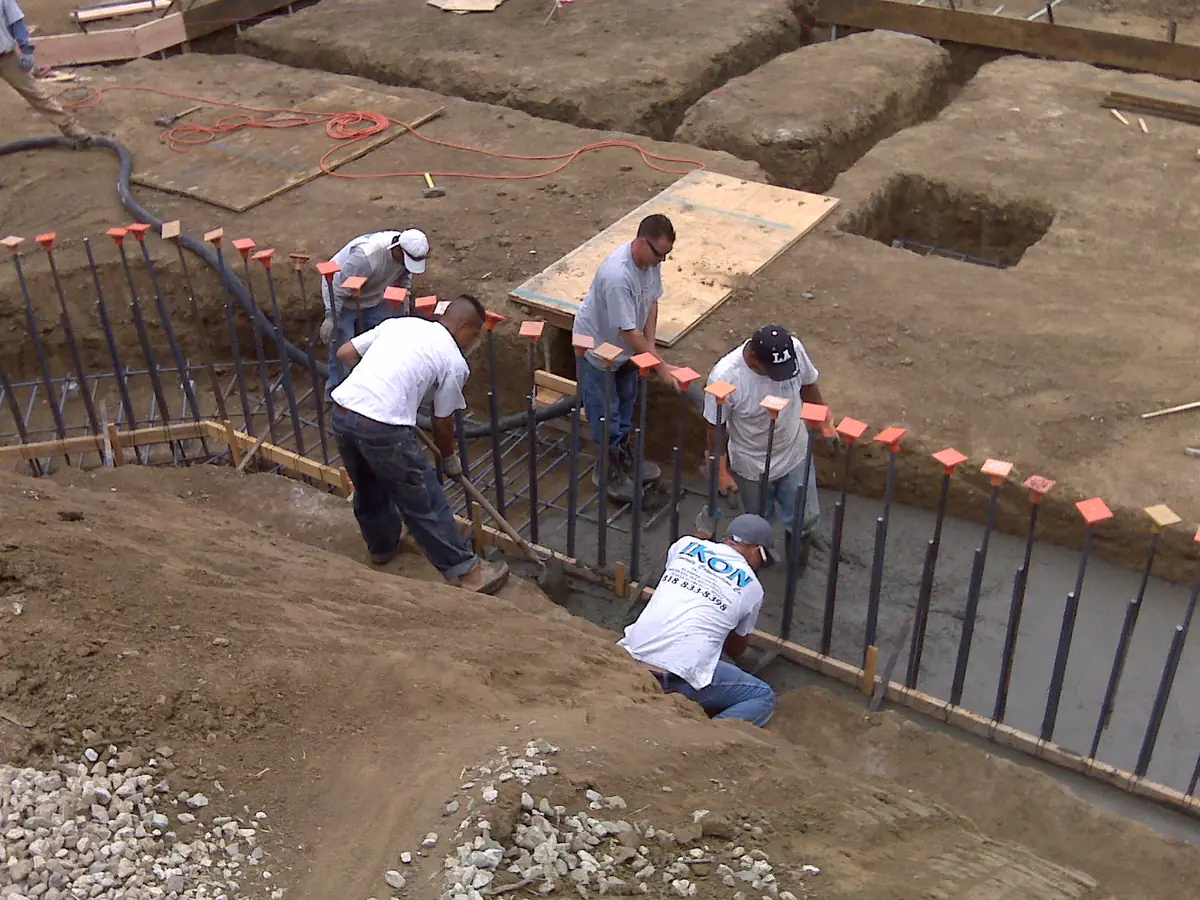
We do grading and hillside construction in Santa Clarita, the San Fernando Valley and the foothill and canyon neighborhoods of Los Angeles and Ventura counties: rough and finish grading, compacted pads for slabs and additions, swales and berms that steer runoff, and the footings, walls and drains that go with building on a slope.
Grading is rarely a job by itself for us. It is the first phase of a foundation, a retaining wall, a driveway or a drainage system, and the crew that grades the pad is the crew that pours on it.
On a hillside lot the design is not ours to make. A civil engineer draws the grading plan, a geotechnical firm writes the soils report, and the city or county approves both. Those come from the owner's consultants, and we build to them.
Get a Free EstimateWhat Goes Into Our Grading & Hillside Work
Click any box to read more
Rough grading and finish grading
Rough grading moves the bulk of the dirt: cutting high ground, filling low ground and shaping slopes close to the plan. Finish grading is the last pass, which sets exact elevations for concrete, drains and planting. Fill goes down in compacted layers, because loose fill settles and takes the slab with it.
Pads for slabs, ADUs and additions
A pad is the flat, compacted area a slab or foundation sits on. We cut it to the elevation on the plan, remove soft or organic soil and compact it. The City of Santa Clarita's grading standard is 90 percent of maximum dry density for fill, with the lot pad sloped at least 2 percent toward its drainage outlet.
Slope work, swales and berms
Water running down the face of a slope is what erodes it, so the top of a cut or fill slope gets a berm or a swale, a shallow graded channel that turns water sideways to a drain. Santa Clarita requires graded swales to fall at least 2 percent toward the street or outlet.
Footings, walls and access on a hillside
Hillside work is slower and tighter than flat work. Footings step down the slope, trenches are often dug with small machines or by hand, and every load of soil in or out has to fit the street. In the City of Los Angeles, haul routes for importing and exporting soil are a Hillside Area requirement.
In A Rush? Let's Talk Now!
Why use the concrete crew for the dirt work
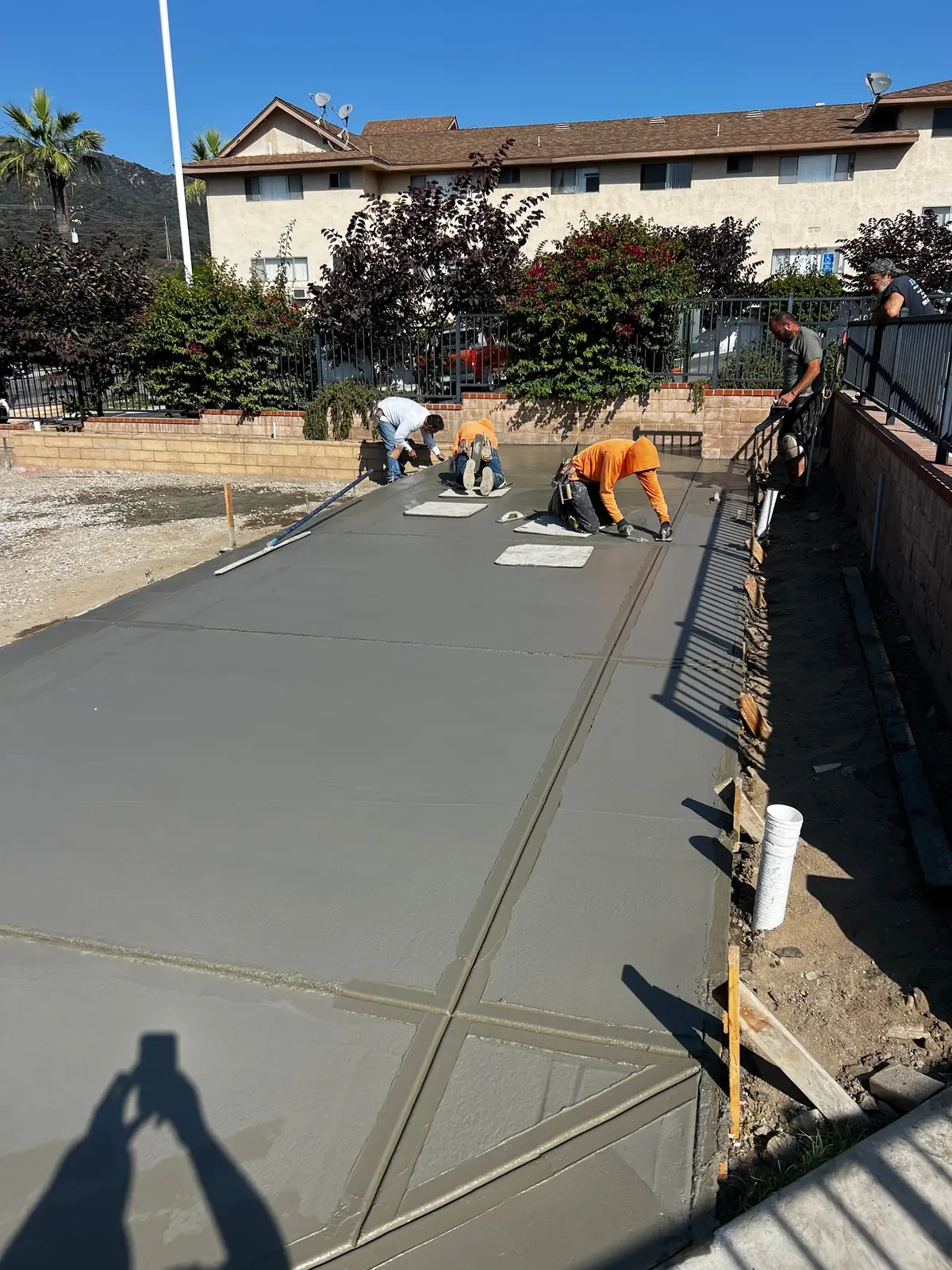
The grade and the concrete are one system. If the pad is an inch high, the slab is an inch high, and water that was supposed to leave the property runs to the door instead. Ikon has done both as a family owned contractor since 1999, with an eight person crew.
CSLB license 770901 includes the B General Building classification along with C-8 Concrete. Gilbert Rico, the owner, reviews the grading plan and walks the site before pricing it. The estimate costs nothing, and work typically begins around two weeks after approval, or once the permit is in hand.
Get a Free EstimateWhen a job needs grading before concrete
- The yard slopes toward the house, or water collects where the new slab will go
- You are adding an ADU, addition, garage or pool and the plans show a new pad elevation
- The site has loose fill, old backfilled trenches or soil that stays soft
- A slope is eroding, or soil is piling up against a wall or fence at the bottom
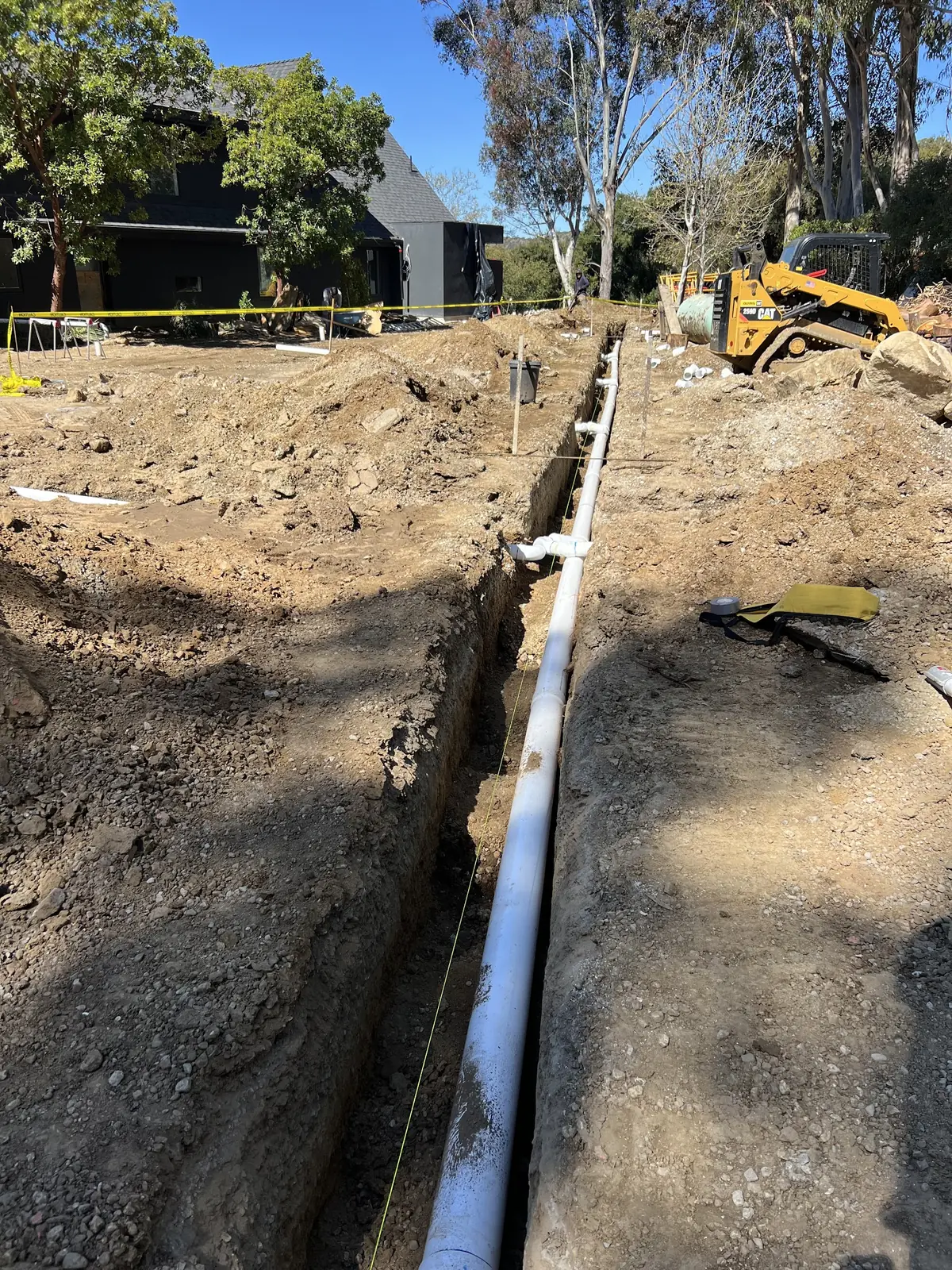
- The plans call for a retaining wall, which means excavation and compacted backfill
What sets the price of grading and hillside work
Grading is priced by how much soil moves and where it goes. Dirt cut from one spot and compacted in another on the same lot is the cheapest dirt. Soil trucked away, or fill trucked in, adds hauling and dump or material costs by the load.
Access is the second driver. A hillside lot reached through a side yard takes many more hours than an open lot for the same volume, and engineering, soils testing and permits are owner costs on top.
Hillside and engineered grading vary too much from lot to lot for a chart figure to mean anything. We price it from the plans and a free site visit. Reach us through the contact page.
How a grading job runs
- Plans and permits. We review the grading plan and soils report if the job has them, and tell you at the estimate whether the work is likely to need a grading permit. In Santa Clarita, equipment may not be brought to the site until that permit is issued.
- Mark and clear. Buried lines are located through 811, limits are staked, and vegetation, old concrete and unsuitable soil come out.
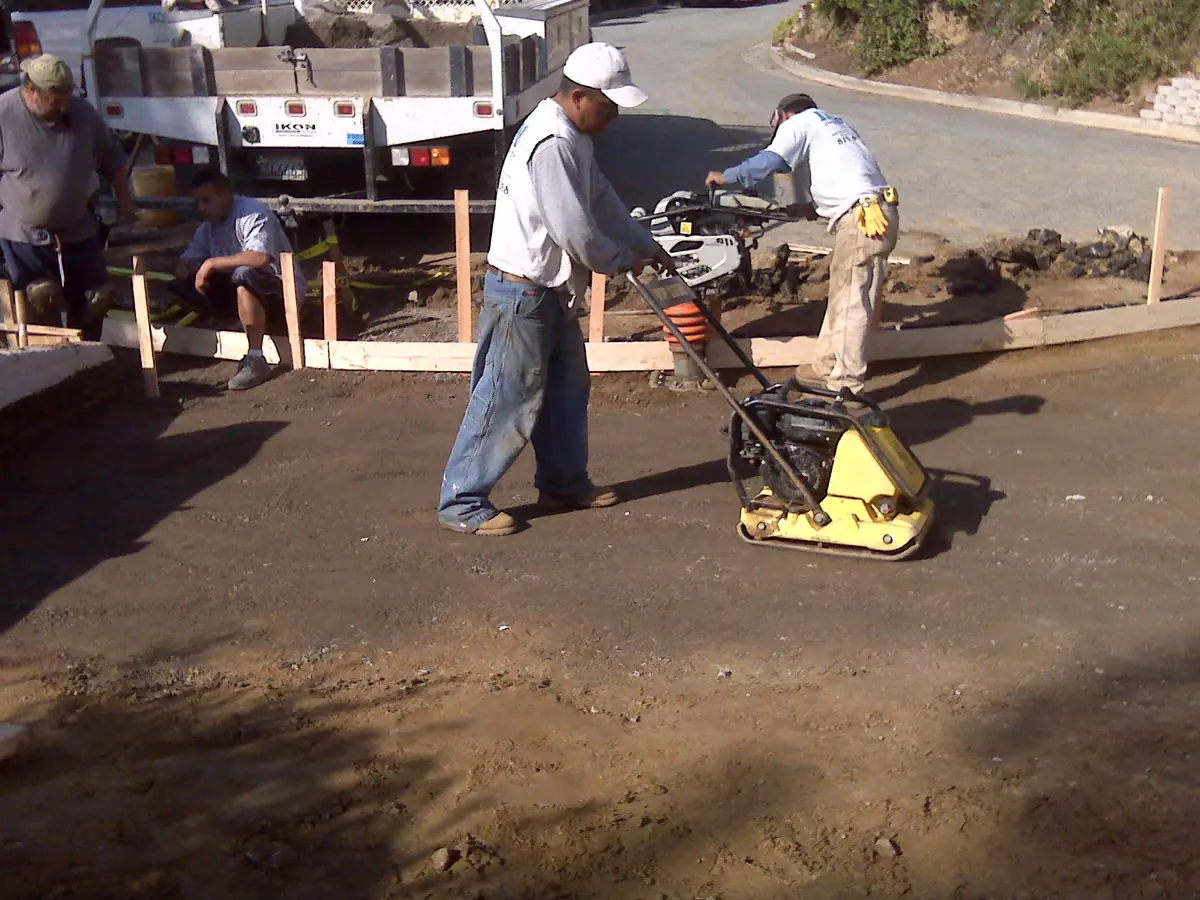
- Cut, fill and compact. Fill goes down in thin lifts at the right moisture and is compacted with a roller, plate compactor or rammer. On permitted jobs a soils technician tests the density as the fill comes up.
- Shape the drainage. Swales, berms and pad slopes are cut so the site drains to the street or to the outlet on the plan.
- Finish grade. Final elevations are checked and the pad is ready for forms. On permitted grading in Santa Clarita, rainy season erosion control has to be installed by November 1 and maintained until April 15.
Related services. People who ask about grading & hillside construction often need these too.
5.0 on Google
Read what a homeowner says about meeting Gilbert and talking through decorative concrete options.
Grading & Hillside in Santa Clarita and the San Fernando Valley
Family OwnedSince 1999
California contractor license 770901. C-8 Concrete and B General Building. Free estimates.Grading & Hillside Near You
We bring grading & hillside construction to the cities below. Pick yours for local details.
Grading & Hillside In Three Easy Steps
Send A Message
Call, text or send the form with a few details, and photos if you have them. We reply the day we get it.
Step 1Free Estimate
We walk the site with you, measure, talk through finishes and drainage, and give you a price. No charge.
Step 2We Build It
Most jobs start about two weeks after you approve the estimate. We demo, form, pour, finish and haul off the mess.
Step 3
Grading & Hillside Questions, Answered
LADBS requires a grading permit for cutting, filling, or importing or exporting earth, with a short list of exceptions. An excavation less than 2 feet deep, or one that does not create a cut slope over 5 feet high and steeper than 2 horizontal to 1 vertical, is exempt if the cut is 50 cubic yards or less and does not change the existing drainage pattern. That is from Information Bulletin P/BC 2026-128.
Los Angeles County exempts an excavation of 50 cubic yards or less that is under 2 feet deep, or that creates a cut slope no more than 5 feet high and no steeper than 2 to 1. The City of Santa Clarita requires a Hillside Development Review for grading over 100 cubic yards in a hillside area, in addition to the grading permit.
It is a City of Los Angeles zoning ordinance that, among other things, caps how much grading is allowed on a lot inside the city's mapped Hillside Area. Remedial grading that a geotechnical report recommends and the LADBS Grading Division approves does not count toward the cap.
No. Engineered grading plans come from a licensed civil engineer and soils reports come from a geotechnical firm, both hired by the owner. We are the contractor who builds what they specify.
Yes. The building code target is at least 6 inches of fall in the first 10 feet away from the foundation. Where a property line, wall or slope makes that impossible, the code calls for drains or swales instead.
In thin layers, each brought to the right moisture and compacted with equipment sized for the area. Santa Clarita's grading standard requires fill to reach at least 90 percent of its maximum dry density under the ASTM D1557 test.
Ready To Talk About Grading & Hillside?
Family owned since 1999. California license 770901. Free estimates.