
San Fernando & Santa Clarita ValleysConcreteStaining
Acid and water-based stains that color the concrete you already have, without paint, coatings or a new pour.
Concrete Staining at a glance
- Service
- Concrete Staining
- Service area
- Santa Clarita Valley, San Fernando Valley, north Los Angeles County, Ventura County, Antelope Valley
- Estimate
- Free, on site
- Typical start
- About two weeks after you approve the estimate
- Hours
- Monday to Saturday, 6 AM to 7 PM
- Phone
- (818) 464-5763
- License
- California 770901, C-8 Concrete and B General Building
- Company
- Ikon Concrete Design, family owned since 1999
Last updated November 2026
Concrete Staining Contractor in the San Fernando Valley and Santa Clarita
Color that soaks into the slab you already have
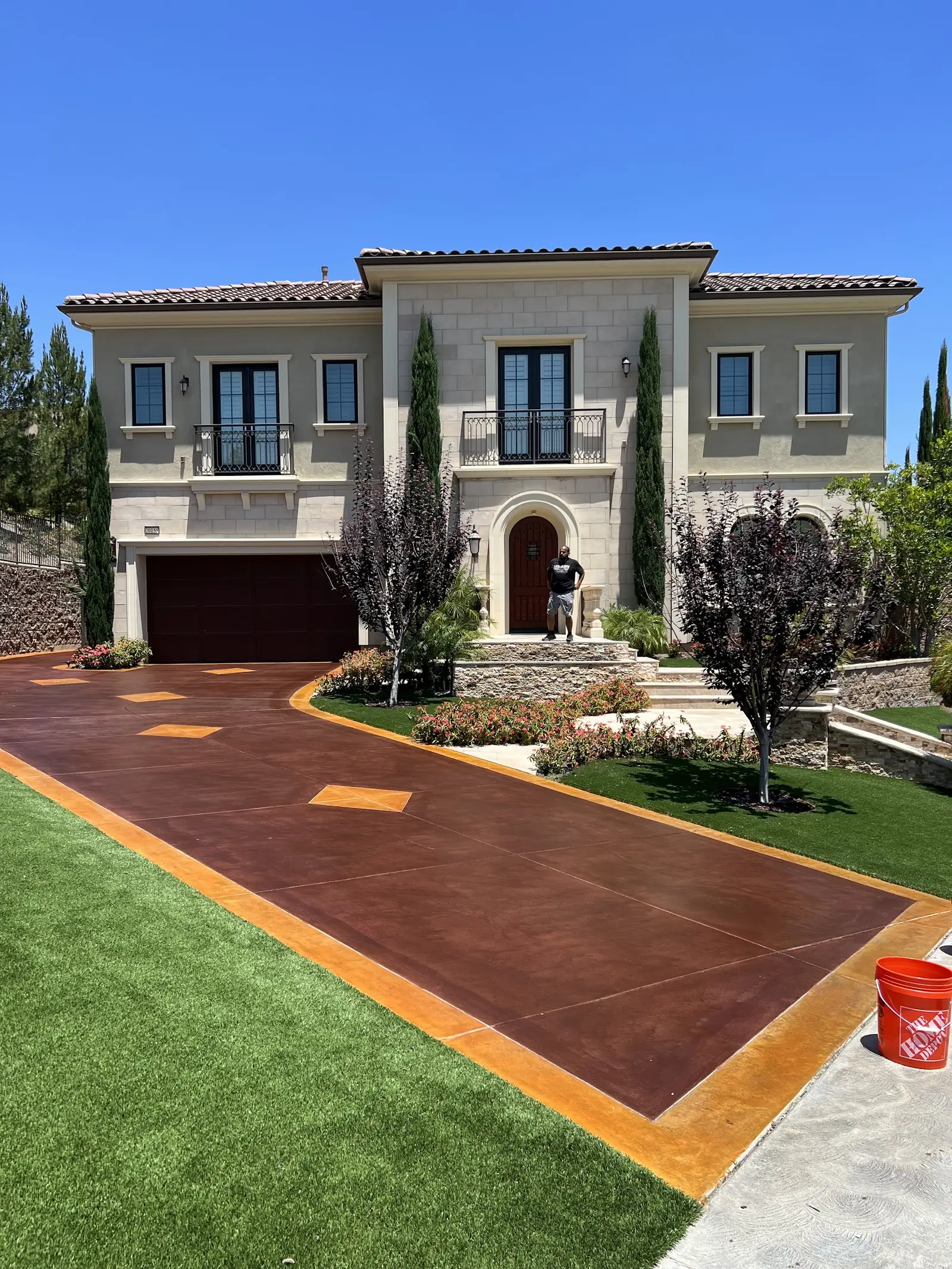
We stain existing concrete driveways, patios, walks, pool decks and floors in the San Fernando Valley and the Santa Clarita Valley. Stain is not paint. It soaks into cured concrete and colors the surface itself, so there is no film to peel and the slab's natural variation shows through.
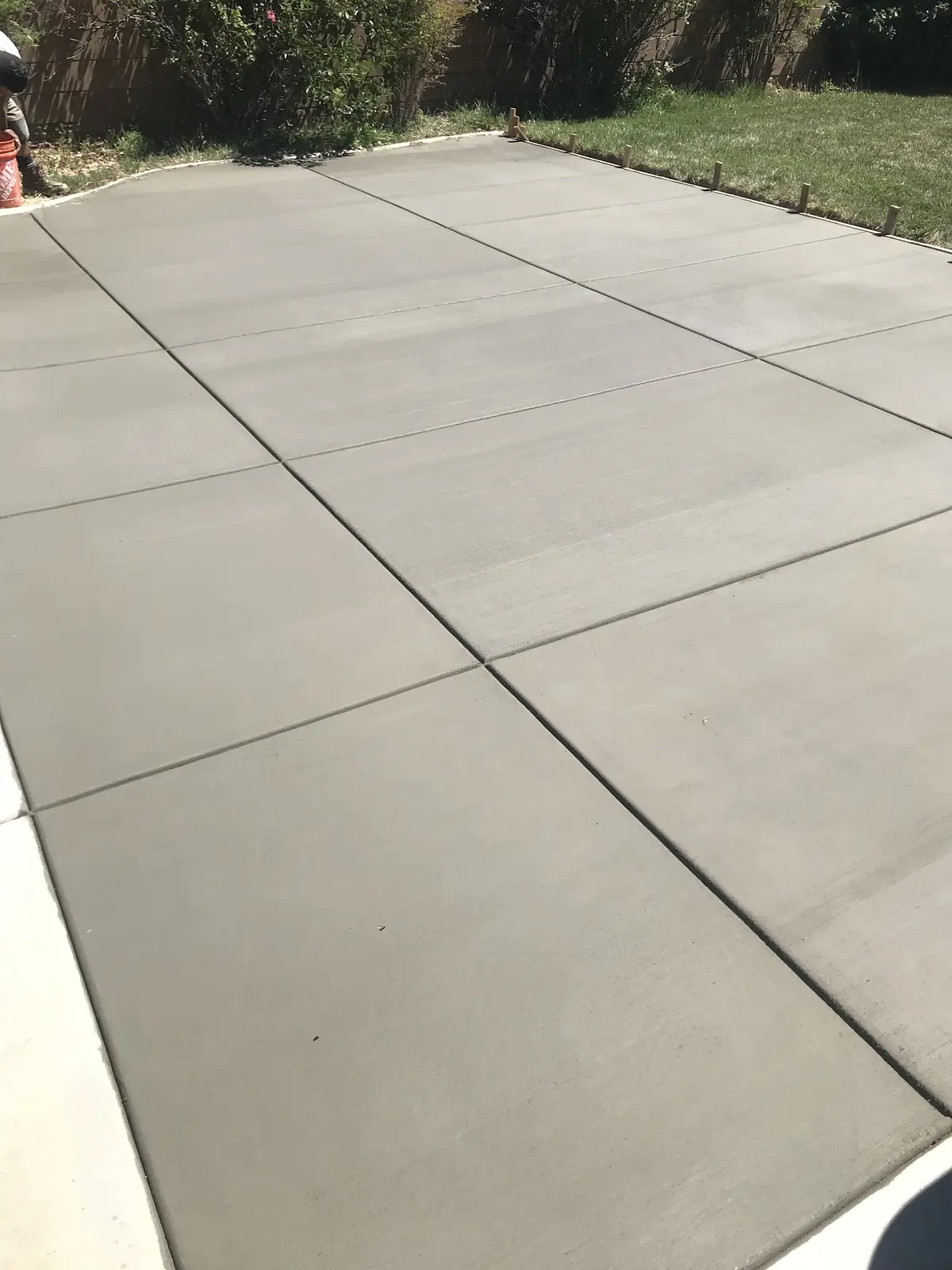
Staining and coloring are different jobs. Stain goes on concrete that has already cured, whether it is fairly new or thirty years old, while colored concrete gets its pigment on the day of the pour.
Stain is translucent, so it will not hide patches, oil spots, old repairs or other marks. A slab too marked up for stain can get a thin overlay first, covered under resurfacing and sealing.
Get a Free EstimateWhat Goes Into Our Concrete Staining Work
Click any box to read more
Earth tones that become part of the slab
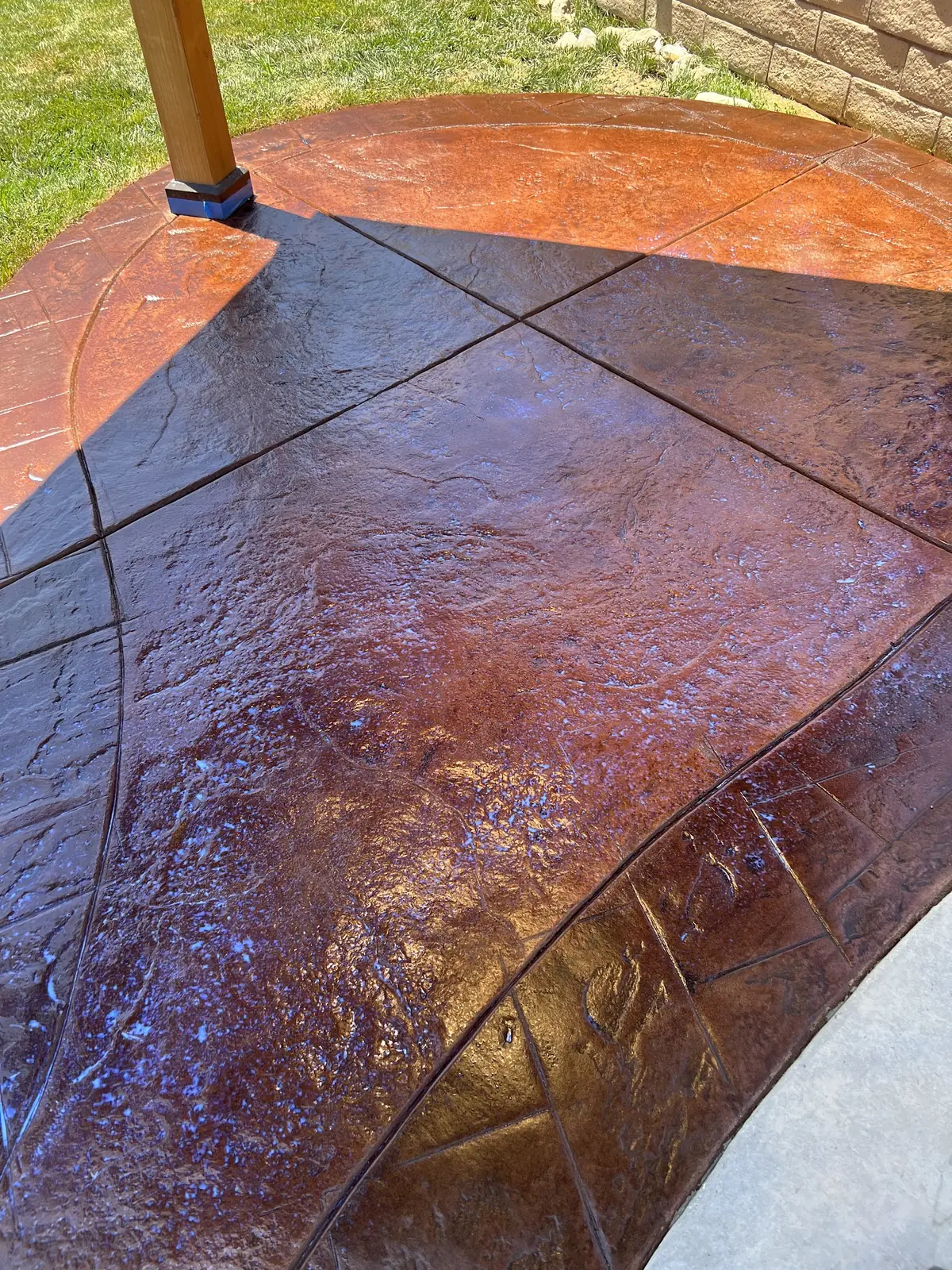
Acid stain is an acidic solution of metallic salts. It reacts with the free lime in the concrete and leaves colored mineral deposits in the surface, which is why the color does not chip or peel. The palette is earth tones: tans, ambers, browns and terra cotta.
More colors, and an answer for old slabs
Water-based stain carries fine pigment into the pores without a chemical reaction. It comes in more colors and works on old or weathered slabs that no longer react with acid. The trade-off is wear: at least one major manufacturer rules its water-based stain out where vehicles drive, so on driveways we use acid stain.
Patterns cut in before the color
A plain slab becomes a design when shallow lines are cut into it first: large diagonal squares or a border band. The cuts keep one stain color from bleeding into the next, so a border can be amber while the field is brown.
The clear coat sets the final look
Raw stain looks dull and chalky until it is sealed. Sealer brings up the depth and protects the color from tires, spills and foot traffic, in a low sheen or a wet look. Outdoors we keep the coats thin, because heavy sealer in direct sun is what bubbles and turns white.
In A Rush? Let's Talk Now!
Why have Ikon stain your concrete
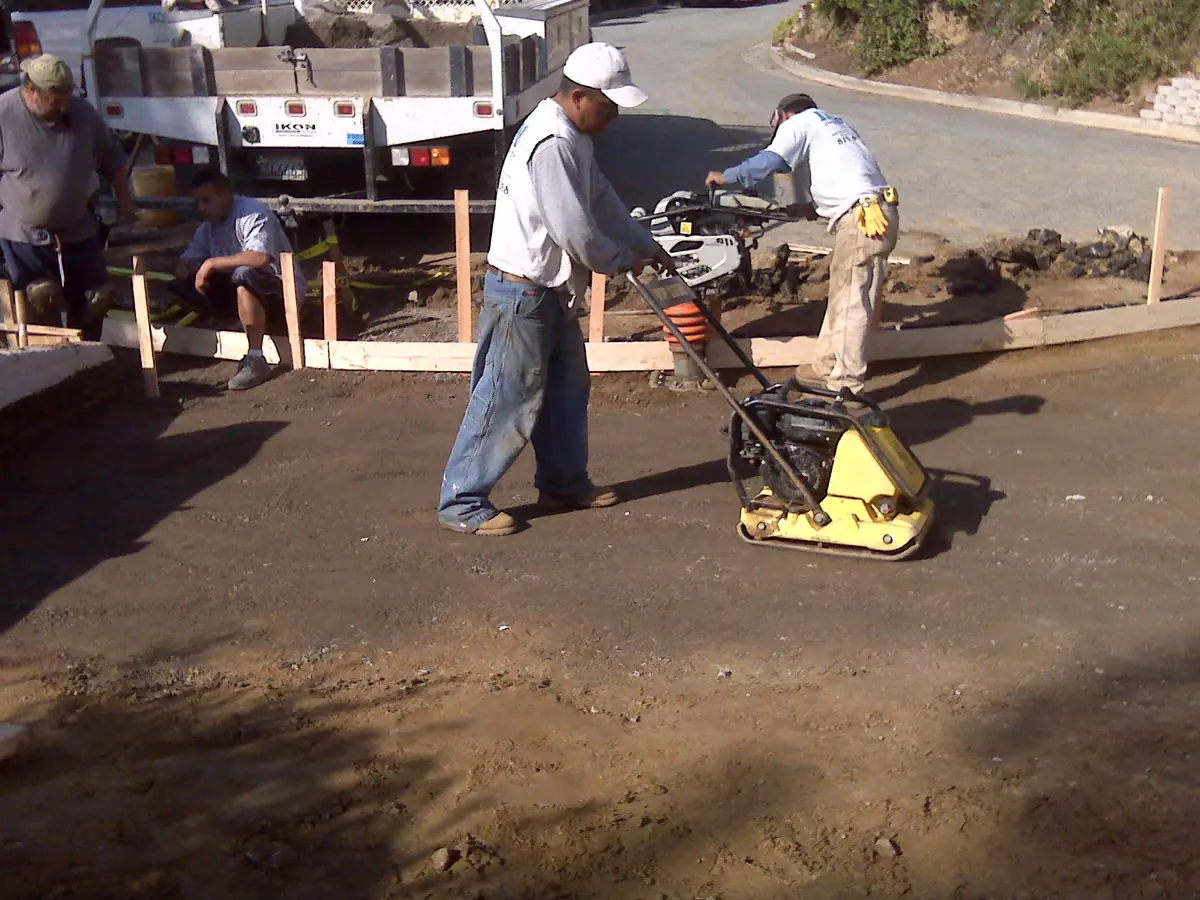
Stain rewards preparation and punishes shortcuts. The slab has to be clean and open, the stain needs time to react, the residue has to be neutralized and rinsed off, and the surface has to be dry before sealer. Skip one and the sealer lets go.
Ikon Concrete Design is family owned, in business since 1999, with a crew of eight and California license 770901 (C-8 Concrete and B General Building). Because we also pour and replace concrete, we can tell you when a slab is worth staining and when it is not. Estimates are free, and most jobs start about two weeks after you approve one.
Get a Free EstimateIs your slab a good candidate for stain?
- It passes the water test: sprinkled water soaks in fast and darkens the surface evenly. If it beads, sealer has to come off first
- The surface is sound, with no flaking, pitting or sandy top layer
- You are fine with variation, since stain is mottled and no two slabs match
- Patches and old repairs are few. Patch material takes stain differently from the slab around it
- New concrete has had time. Acid stain wants a slab that has cured for as long as the stain maker calls for
- Outdoors, you want browns, tans, ambers or reds. Blue-green acid stains can turn black with rain or sprinklers and are for interiors only
What goes into the price of staining
Size sets part of the price, and prep is the swing factor. A driveway with old sealer, oil stains and paint drips can take longer to prep than to stain.
Saw-cut patterns, layered colors, borders and hand-applied detail add time, and so does masking around walls, posts and plants. No two slabs are alike, which is why we look before we price.
We give our price after seeing the slab, at no charge. Send photos through the contact page or text (818) 464-5763.
How we stain a slab, step by step
- Test. We stain and seal a small out-of-the-way spot so you see the real color first.
- Clean and open the surface with degreaser and an alkaline cleaner, after stripping any sealer. We do not acid wash first, because the stain makers say not to.
- Lay out and cut the pattern, then mask walls, posts, doors and plants.
- Spray the stain, usually in two applications, and give it the reaction time the stain maker calls for. Slab temperature matters to stain, so in summer we usually work early in the morning.
- Neutralize with a baking soda solution, scrub, and rinse until the surface tests neutral and a white rag wipes clean. The rinse water is collected, since it cannot run to the street or a storm drain.
- Let the slab dry completely, then seal on the timing the sealer maker recommends for that product and the weather. We tell you when it is ready for cars.
Related services. People who ask about concrete staining often need these too.
5.0 on Google
Read what a homeowner says about meeting Gilbert and talking through decorative concrete options.
Concrete Staining in Santa Clarita and the San Fernando Valley
Family OwnedSince 1999
California contractor license 770901. C-8 Concrete and B General Building. Free estimates.Concrete Staining Near You
We bring concrete staining to the cities below. Pick yours for local details.
Concrete Staining In Three Easy Steps
Send A Message
Call, text or send the form with a few details, and photos if you have them. We reply the day we get it.
Step 1Free Estimate
We walk the site with you, measure, talk through finishes and drainage, and give you a price. No charge.
Step 2We Build It
Most jobs start about two weeks after you approve the estimate. We demo, form, pour, finish and haul off the mess.
Step 3
Concrete Staining Questions, Answered
Acid stain color is part of the concrete surface rather than a coating on top, so there is no film to chip or peel. What wears is the sealer on top and, in heavy traffic lanes, the surface of the concrete itself. Sun, traffic and upkeep decide how soon that shows.
Usually, yes. Very old or weathered slabs sometimes have too little free lime left for acid stain to react, which shows when the stain does not fizz on the test spot. Those get a water-based stain.
No. Stain is see-through, so anything on the slab now will still show, and patched areas usually come out a different shade. A thin overlay first gives a uniform surface to stain.
Acid stain reacts chemically with the concrete and gives mottled earth tones with no film on top. Water-based stain deposits pigment in the pores, comes in more colors, and has no acid residue to neutralize, which suits interior floors.
Yes, when it is acid stained and sealed with a sealer made for vehicle traffic. Turning tires are hard on any sealer, so driveways need resealing sooner than patios.
Stain does not change the texture, so a broom-finished patio keeps its grip. A smooth troweled slab under a glossy sealer can be slick when wet, so there we use a lower-gloss sealer with traction grit.
Ready To Talk About Concrete Staining?
Family owned since 1999. California license 770901. Free estimates.