
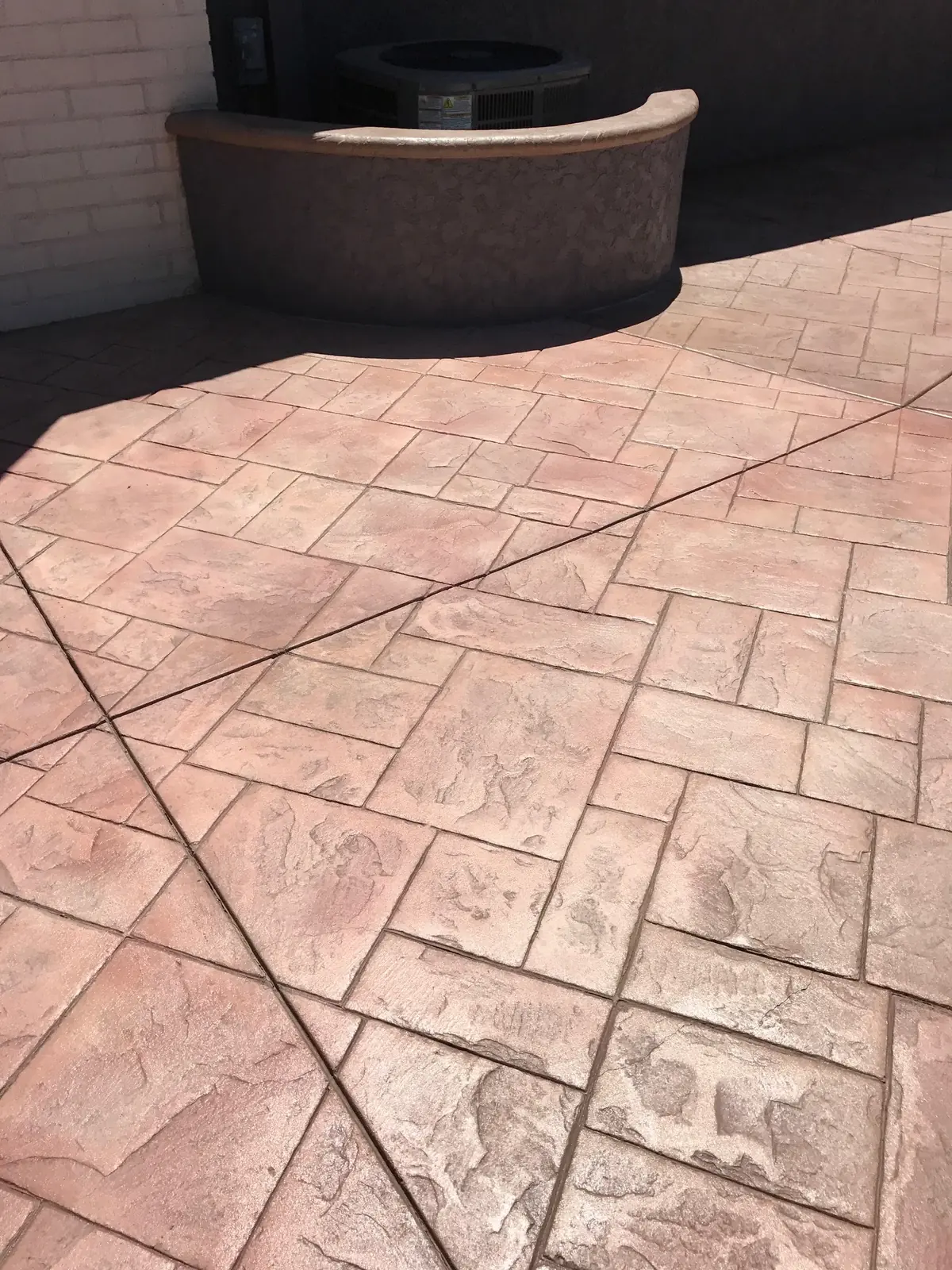
How Often Should Stamped Concrete Be Resealed?
Short answer. Reseal stamped concrete when it needs it, which published guides put at every 2 to 5 years for most slabs. The Decorative Concrete Council says to go by condition and not the calendar: reseal when water stops beading and the color loses its depth. Resealing every year builds up a thick film that can trap moisture, turn white and peel.
Sealer is the part of a stamped slab that wears out. The concrete and the color under it are still there when the surface goes dull. So the question is less about a date and more about what the film on top is doing. Here is what the published guidance says, how to read your own slab, and what goes wrong when sealer goes on too often.
What the published sources say about timing
The sources that give a number land between 2 and 5 years. The one written by decorative concrete contractors for other contractors refuses to give a number at all.
| Source | What it says |
|---|---|
| Decorative Concrete Council, American Society of Concrete Contractors | As needed, not by an exact number of years. Resealing every year to hold a high gloss can be problematic |
| Concrete Network, sealing guide | Every 2 to 5 years. High-traffic areas in harsh environments may need it yearly |
| Concrete Network, resealing guide | 3 to 5 years in mild climates with light traffic. 1 to 2 years with deicing chemicals and heavy vehicles |
| Concrete Network, maintenance guide (2020) | Every 2 to 3 years, depending on weather |
| Solomon Colors, maker of Brickform sealers | Every few years, as wear and deterioration dictate |
| HomeGuide, driveway guide | Every 2 to 3 years |
Deicing salt is not a factor on a San Fernando Valley driveway. Sun, heat and tires are. A shaded patio that only sees foot traffic sits at the long end of those ranges. A south-facing driveway where cars turn in every day sits at the short end. The count starts with the first coat, which goes on a new slab only after the concrete has cured enough, on the timing the sealer maker recommends for that product and the weather.
Signs your stamped concrete is due
Check the slab, not the calendar. These are the signs the sources agree on.
- Water soaks in. Pour a little water on the surface. Concrete Network's test: if it soaks in quickly and darkens the concrete, the sealer has worn off.
- The color has gone flat. The Decorative Concrete Council names loss of water and stain repellency and loss of depth of color as the main reasons to reseal.
- The surface looks dull, chalky or faded where it used to have an even sheen.
- Spills leave marks that used to wipe off.
Two things look like wear and are not. White haze and peeling mean the sealer is failing, not missing, and more sealer on top makes it worse. The council's guidance is that loose, flaky or discolored acrylic sealer has to come off first, by blasting, high-pressure washing or a chemical stripper.
What goes wrong with too much sealer
More sealer is not more protection. A film-forming sealer is meant to be thin. Euclid Chemical, a sealer manufacturer, puts one coat at a typical 300 square feet per gallon at about 5 mils thick wet and 2 mils dry, roughly the thickness of a sheet of paper once cured. Stack coat on coat and several things happen.
- Blushing. Euclid's term for sealer that turns white, peels or flakes. It lists two causes: sealing over a damp surface, and sealer applied too thick or built up over the years, which traps moisture under the film until it loses its grip.
- Bubbles. A heavy coat does not let air out of the concrete. Hot weather and direct sun make it worse, because the surface skins over and traps solvent.
- Lost breathability and bond. The Decorative Concrete Council says sealer applied too thick, or in too many coats, affects both.
- Filled texture. Sika's sealer instructions warn against letting material build up in stamped joints and grout lines, where a thick film can discolor.
- A slick surface. Concrete Network notes that glossier finishes can become slippery when wet.
Build-up is also expensive to undo. The council calls it time-consuming and expensive to remove, which is the best argument for sealing less often.
If the slab still beads water but has lost its shine, it may not need more sealer. The Decorative Concrete Council notes that treating the surface with solvent restores shine without adding another layer. Leave that to someone who knows which sealer is on your slab.
Pool decks and slip additives
A glossy sealer and wet feet are a bad pair, so a stamped pool deck usually gets a traction additive in the sealer. It is a fine, clear grit stirred into the final coat. Euclid's data sheet for one such additive describes a polypropylene powder dosed at 1 cup per gallon of solvent-based sealer, and says it can be used to reach a static coefficient of friction of 0.8 or greater, with results that vary by coating, surface and application.
The grit lives in the sealer, so it wears away with the sealer. On a pool deck, lost traction is one more sign that a reseal is due, and the additive has to go back in with the new coat. Sika's data sheets tell installers to verify wet and dry slip resistance on decorative work for the same reason.
Shared pools carry a written rule. Los Angeles County Public Health requires a slip-resistant, non-abrasive deck at least 4 feet wide around public pools, a category that includes pools at apartments, condominiums and gated communities. Pools at single-family homes are not covered by it.
Resealing in Southern California heat
Timing within the day matters as much as timing between years. The council's rule of thumb is to reseal at an hour when the slab temperature will be falling, not rising, for the next 3 to 4 hours, and to stay out of direct sun. It adds that an evening application is sometimes the only way to do that. Sika caps air and slab temperature at 85 degrees for its solvent-based sealer. Normal daily highs in Woodland Hills run above 88 degrees from June through September, so a summer reseal here usually means late-day work, or waiting for cooler weather.
Preparation is the other half. The council recommends a power wash at 3,500 psi or more and then a full 24 hours of drying, and says using the exact sealer that is already on the slab gives the best result. When that is not possible, a small test area shows whether the new product gets along with the old one. In the South Coast air district, which includes the City of Los Angeles, Rule 1113 limits concrete and masonry waterproofing sealers to 100 grams of VOC per liter, so the product on an older slab may no longer be the one sold here.
Where Ikon fits in
We pour stamped concrete and we clean, strip and reseal it under resurfacing and sealing. If you are not sure whether your slab needs sealer or needs sealer removed, send photos or call or text (818) 464-5763 for a free estimate.
More questions
Moisture is trapped under the film. Euclid Chemical lists two causes: sealer applied to a damp slab, and sealer put on too thick or built up over many coats. Another coat will not clear it. The failed sealer usually has to be removed first.
Not when the old sealer is sound and the new one is compatible with it. The Decorative Concrete Council says the same sealer as last time gives the best result, and that loose, flaky or discolored sealer must be removed before anything new goes on.
It depends on the product. Sika's solvent-based sealer lists light foot traffic at 6 hours, light car traffic at 24 hours and normal car traffic at 72 hours, all at 70 degrees. Ask for the times on the data sheet of the sealer used on your slab.
Related services
Written by the Ikon Concrete Design team in Sylmar, California. Ikon Concrete Design is a family owned concrete contractor run by Gilbert Rico since 1999, California license770901. This article is general information. Codes, fees and prices change, so check with your building department and get an on-site estimate before you plan around a number.
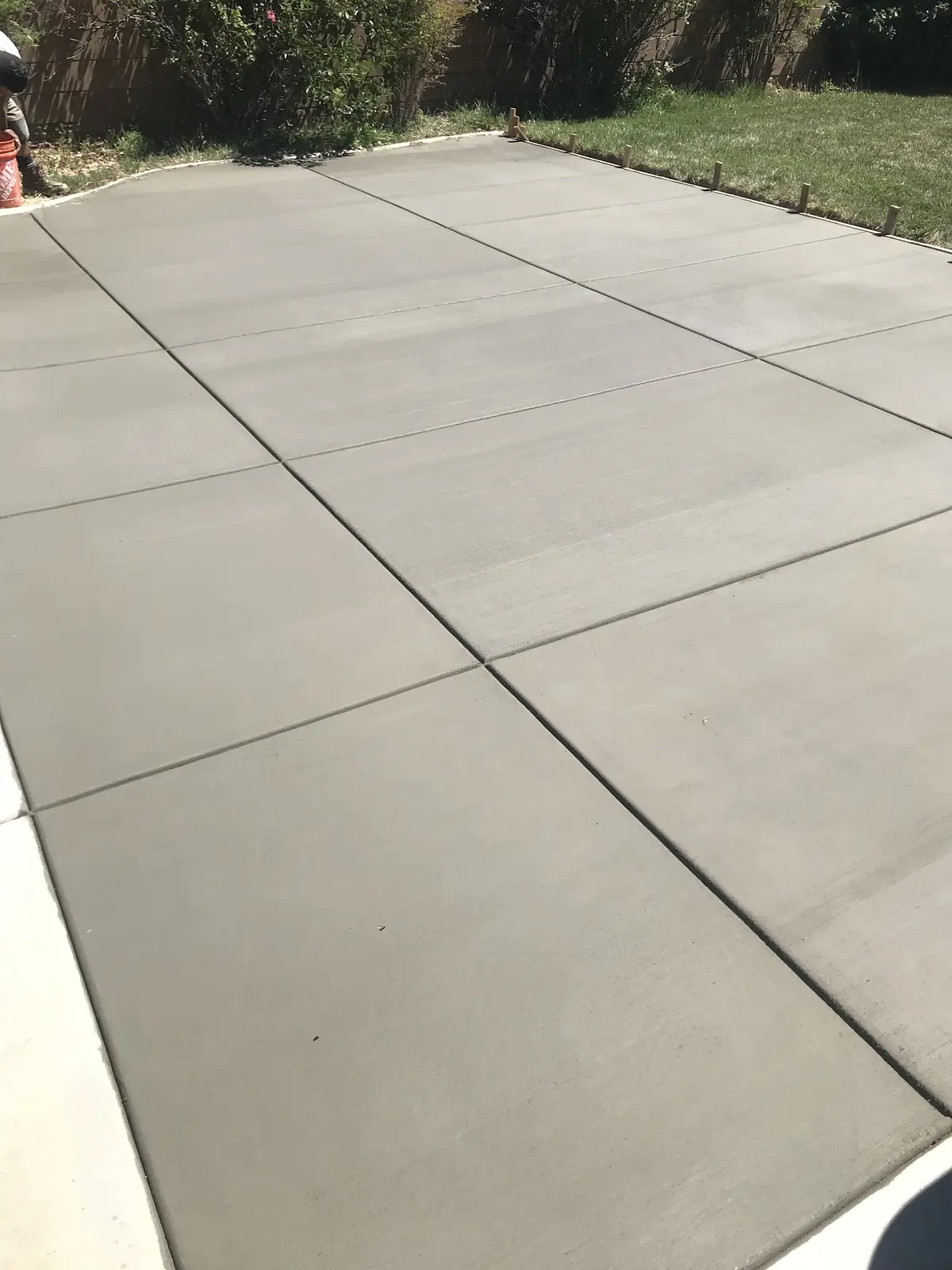
Concrete contractor in Santa Clarita and the San Fernando Valley
Family OwnedSince 1999
California contractor license 770901. C-8 Concrete and B General Building. Free estimates.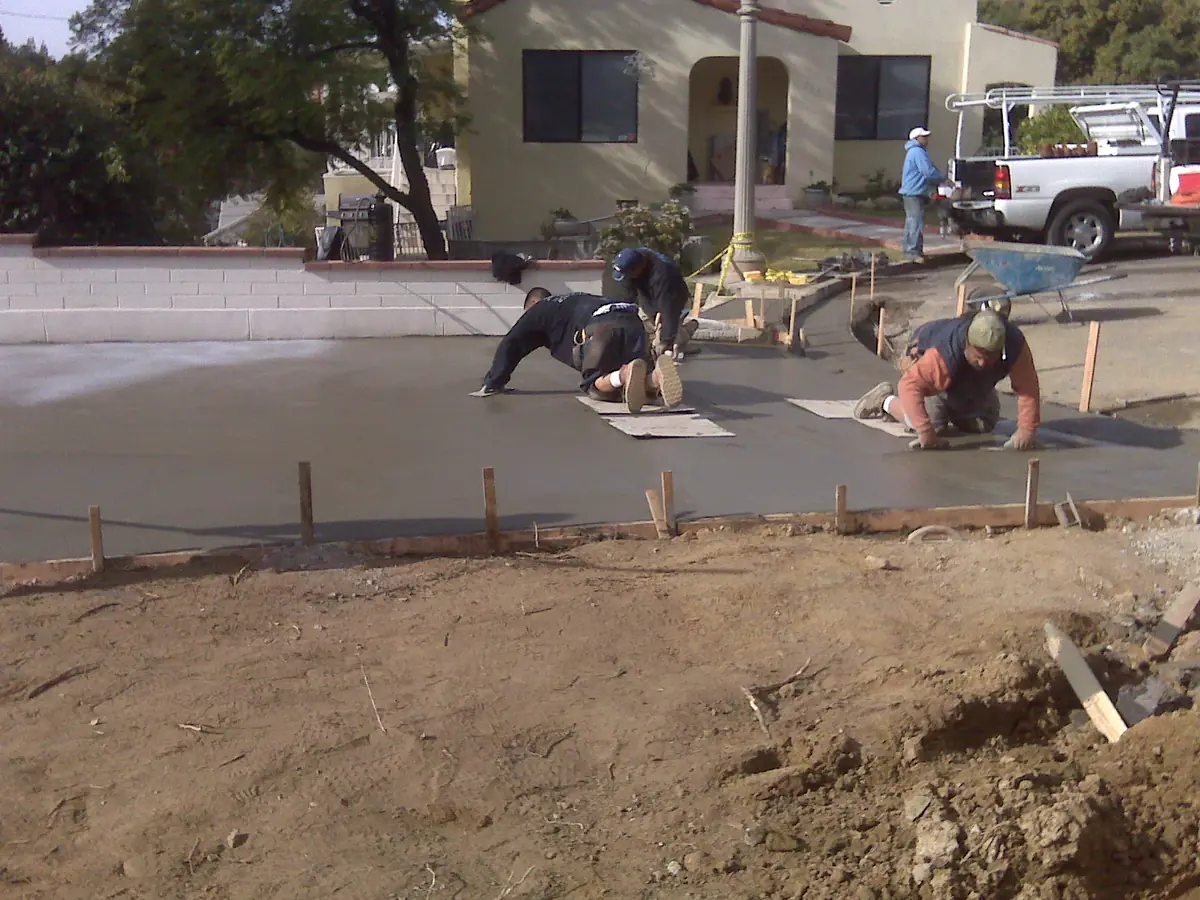
Get Your Concrete Poured In Three Easy Steps
Send A Message
Call, text or send the form with a few details, and photos if you have them. We reply the day we get it.
Step 1Free Estimate
We walk the site with you, measure, talk through finishes and drainage, and give you a price. No charge.
Step 2We Build It
Most jobs start about two weeks after you approve the estimate. We demo, form, pour, finish and haul off the mess.
Step 3
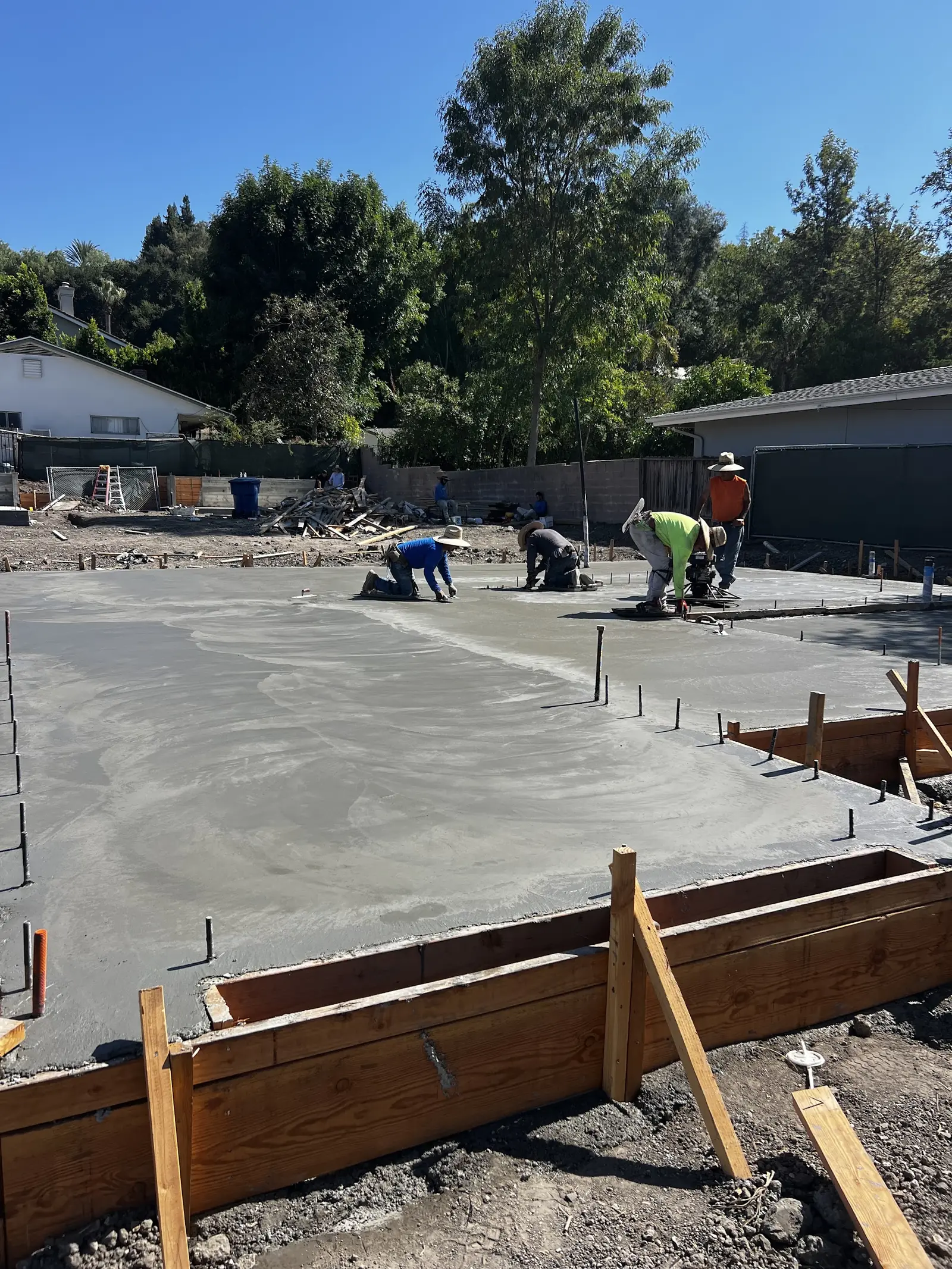
Ready For Your Concrete Project?
Family owned since 1999. California license 770901. Free estimates.