
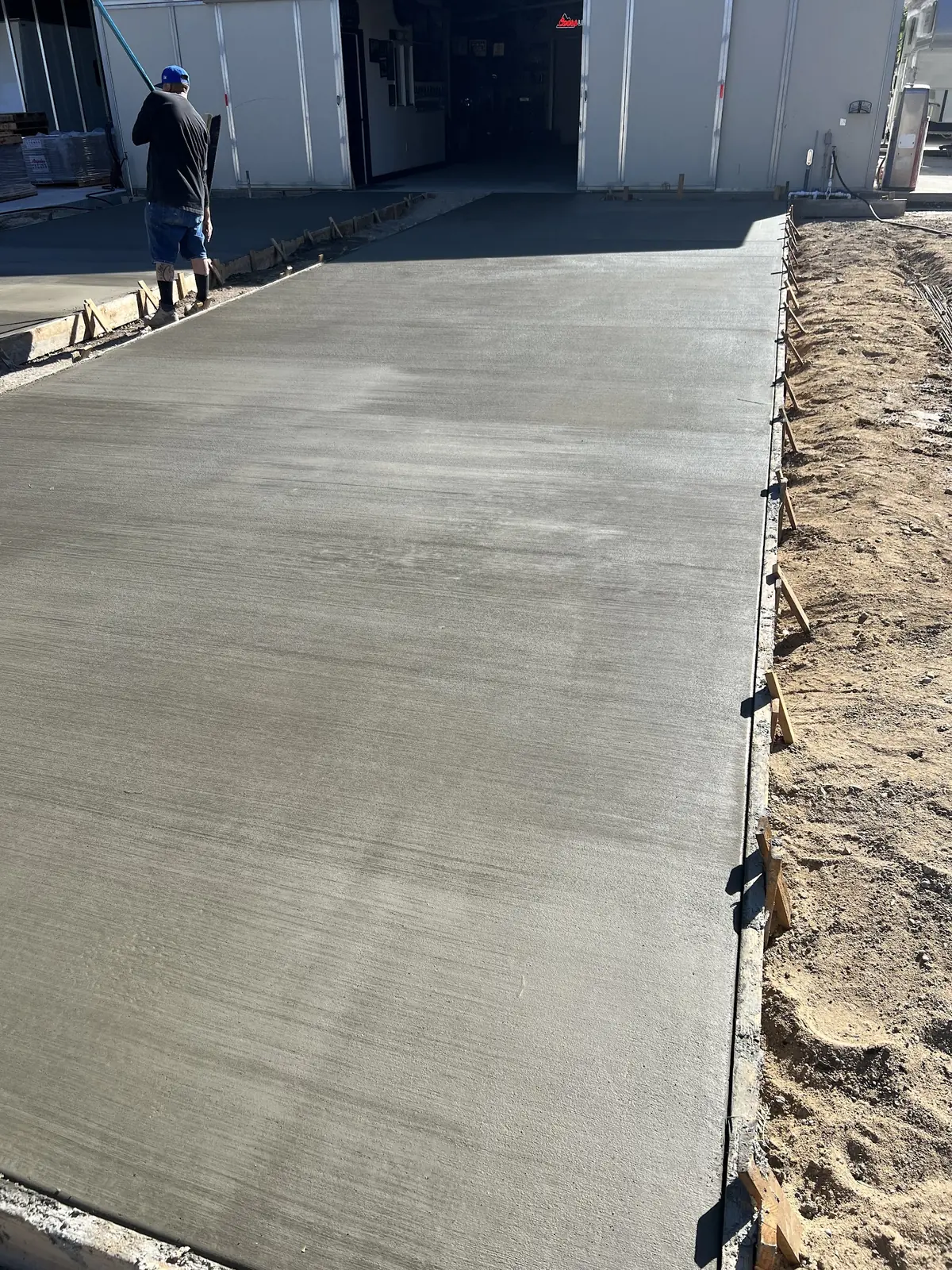
How Long Does Concrete Take to Cure in Southern California?
Short answer. Concrete Network publishes waits of about 24 hours before walking on new concrete, 7 days before parking a car on it and 28 days before an RV or loaded truck. Twenty-eight days is also the age at which concrete strength is normally measured. The mix and the weather on your job can lengthen those waits, and Southern California heat, which makes concrete set faster, does not shorten them.
Concrete does not dry out to get hard. It hardens because cement reacts with water, and that reaction needs the water to stay in the slab. Curing is the work of keeping it there for the first days. That is why a hot, dry, windy afternoon in the San Fernando Valley is harder on a new slab than a cool gray morning, and why the calendar below does not speed up in summer.
Published walk-on and drive-on times
The short version from the published guides is one day, one week, four weeks.
| Milestone | Typical wait | Source |
|---|---|---|
| Walk on a broom or trowel finished slab | At least 24 hours | Concrete Network |
| Foot traffic, cautious range | 24 to 48 hours | HomeGuide |
| Drive and park a passenger car | 7 days | Concrete Network |
| Strength at 7 days | About 70 percent of its potential | Concrete Network |
| RVs, moving vans, loaded trucks | At least 28 days | Concrete Network |
| Acid stain on new concrete | At least 21 days | Sika data sheet |
| Water-based stain on new concrete | 28 day cure | Sika data sheet |
Two cautions go with the table. Stay off the edges for the first weeks, because Concrete Network notes they are the part of a driveway most easily damaged. And treat every figure as a minimum for mild weather. Every job is different: the ready-mix supplier, the mix and the weather on pour day all move the real number, so go by what you are told for your own slab.
Setting is not curing
A slab that is hard enough to walk on has set. It has not cured. Setting takes hours and heat speeds it up. Curing is strength gain over days and weeks, and it stops early if the surface dries out. The American Concrete Institute's hot weather guide, ACI 305R-20, reports that test cylinders kept at 100 degrees for their first 24 hours can come in 10 to 15 percent weaker at 28 days than cylinders cured at the standard temperature, and weaker again if they are allowed to dry.
So a summer slab feels ready sooner and is not. The seven day and 28 day waits hold in August the same as in January.
What ACI 305 says about hot weather
Hot weather, in the ACI guide, is not a number on a thermometer. It is any one or a combination of four conditions: high air temperature, high concrete temperature, low relative humidity and high wind speed. Each of them pulls water out of fresh concrete faster or makes the cement react faster. The guide says a windy, sunny day calls for stricter precautions than a calm, humid one even when the air temperature is identical.
It lists what goes wrong when those conditions are ignored:
- The mix needs more water to stay workable, and loses slump faster on the way to the job.
- Crews are tempted to add water at the site, which weakens the concrete.
- The concrete sets faster, so there is less time to place, strike off and finish it.
- The surface can dry out faster than water rises through the slab.
Among the practices the guide recommends are cooling the fresh concrete, cutting the time between truck and finish, protecting the slab from moisture loss during placing and curing, and scheduling the placement for the hours of the day or night when conditions are favorable.
Pour timing in a valley summer
All four of those conditions show up here between June and September. Normal August highs are 97 degrees in Woodland Hills and about 94 in Santa Clarita, and Lancaster and Palmdale run close to 98.
That is why summer pours here often start early in the day, when the air and the forms are usually at their coolest and the wind at its calmest, in line with ACI's advice to place concrete when conditions are favorable. For stamped concrete the timing matters even more, because the pattern has to go in while the surface will still take a clean impression. Weather on the day can move a pour, decorative work most of all, so the schedule for each job is set around its own forecast.
Do not hose down a new driveway on a hot afternoon to cool it off unless your contractor told you to. Wetting a slab now and then and letting it dry between is not curing, and on colored concrete it can leave marks. Ask at the pour how the slab is being cured and what, if anything, you should do.
How concrete is cured
Every curing method does one job, which is to stop water leaving the slab. The National Ready Mixed Concrete Association puts the usual curing period at 3 to 7 days.
- Curing compound. A liquid sprayed on right after finishing that dries to a thin membrane. It is the common choice for driveways, patios and walks because it goes on once and needs nothing from the homeowner.
- Wet covering. Burlap or curing blankets kept wet without a break. It works well and takes daily attention.
- Plastic sheeting. Holds moisture in, but can leave streaks or blotches where it touches the surface, so it is a poor fit for colored or decorative slabs.
- Cure and seal. On decorative work, some sealers are made to do both jobs in one product.
One thing changes the choice. A slab that will be acid stained later should not get a film-forming curing compound, because stain makers say it blocks the reaction. Tell your contractor before the pour if staining is in the plan.
Where Ikon fits in
We pour driveways, patios and foundations from Sylmar across the San Fernando and Santa Clarita valleys. At the pour we go over when you can walk and park on your new slab, and sealer goes on only after the concrete has cured enough, on the timing the sealer maker recommends for that product and the weather. Estimates are free: call or text (818) 464-5763, or send a message.
More questions
It sets faster, which is not the same thing. ACI's hot weather guide reports that concrete kept at 100 degrees for its first day can test 10 to 15 percent weaker at 28 days. Hold to the drive-on wait given for your slab even when it feels hard on day two.
Not in any way that matters to a homeowner. The strength a slab is designed around is the one measured at 28 days, which is why 28 days is the wait for heavy vehicles. Any gain after that is a bonus, not something to plan around.
It depends on the product. Sika's data sheets call for concrete at least 21 days old before acid stain and a 28 day cure before water-based stain. The Decorative Concrete Council treats 28 days as the standard for fully cured and tells installers to follow the sealer maker's cure time. So sealer goes on once the slab has cured enough for that product, on the maker's timing, not on a set day after the pour.
Related services
Written by the Ikon Concrete Design team in Sylmar, California. Ikon Concrete Design is a family owned concrete contractor run by Gilbert Rico since 1999, California license770901. This article is general information. Codes, fees and prices change, so check with your building department and get an on-site estimate before you plan around a number.
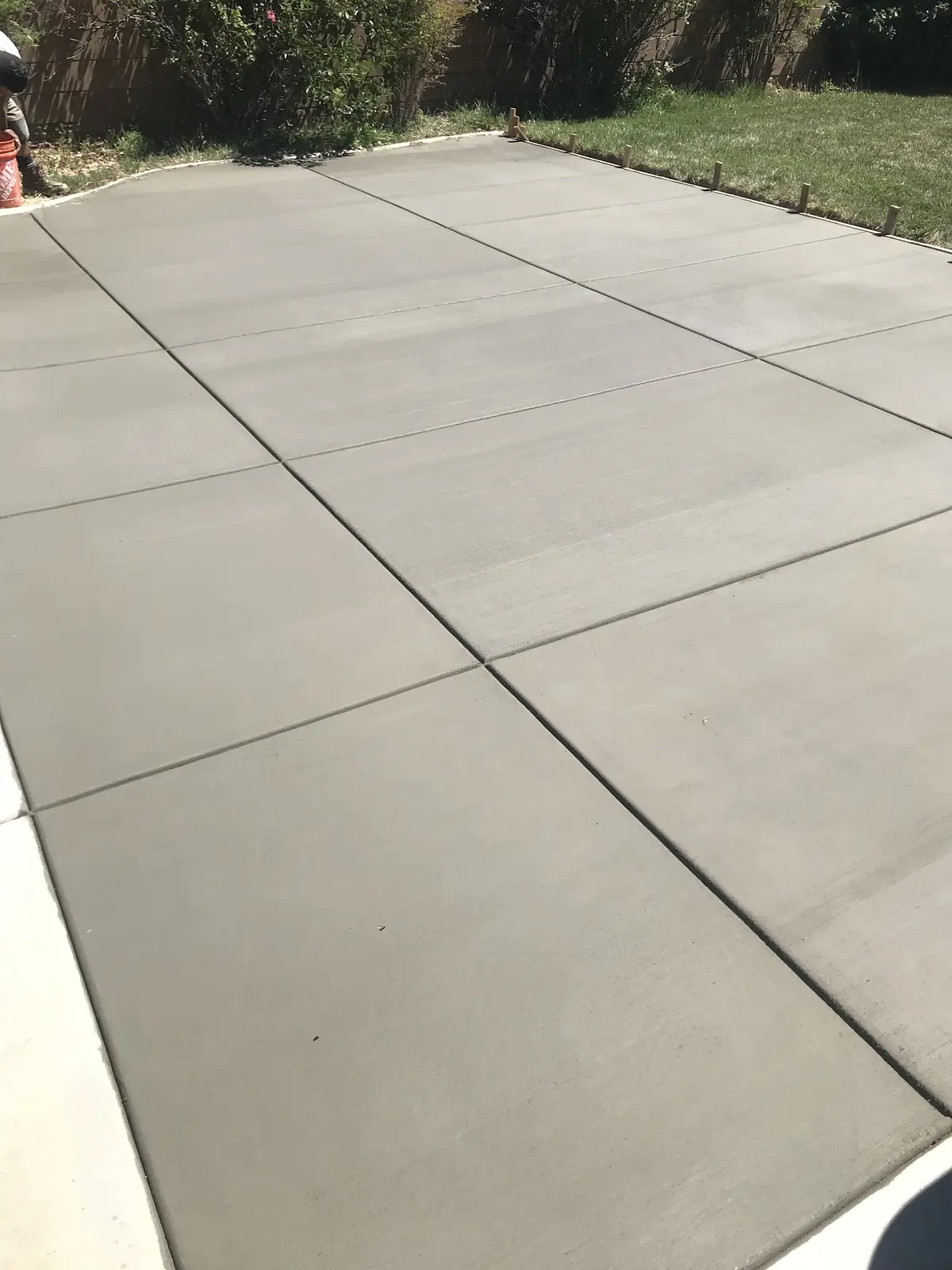
Concrete contractor in Santa Clarita and the San Fernando Valley
Family OwnedSince 1999
California contractor license 770901. C-8 Concrete and B General Building. Free estimates.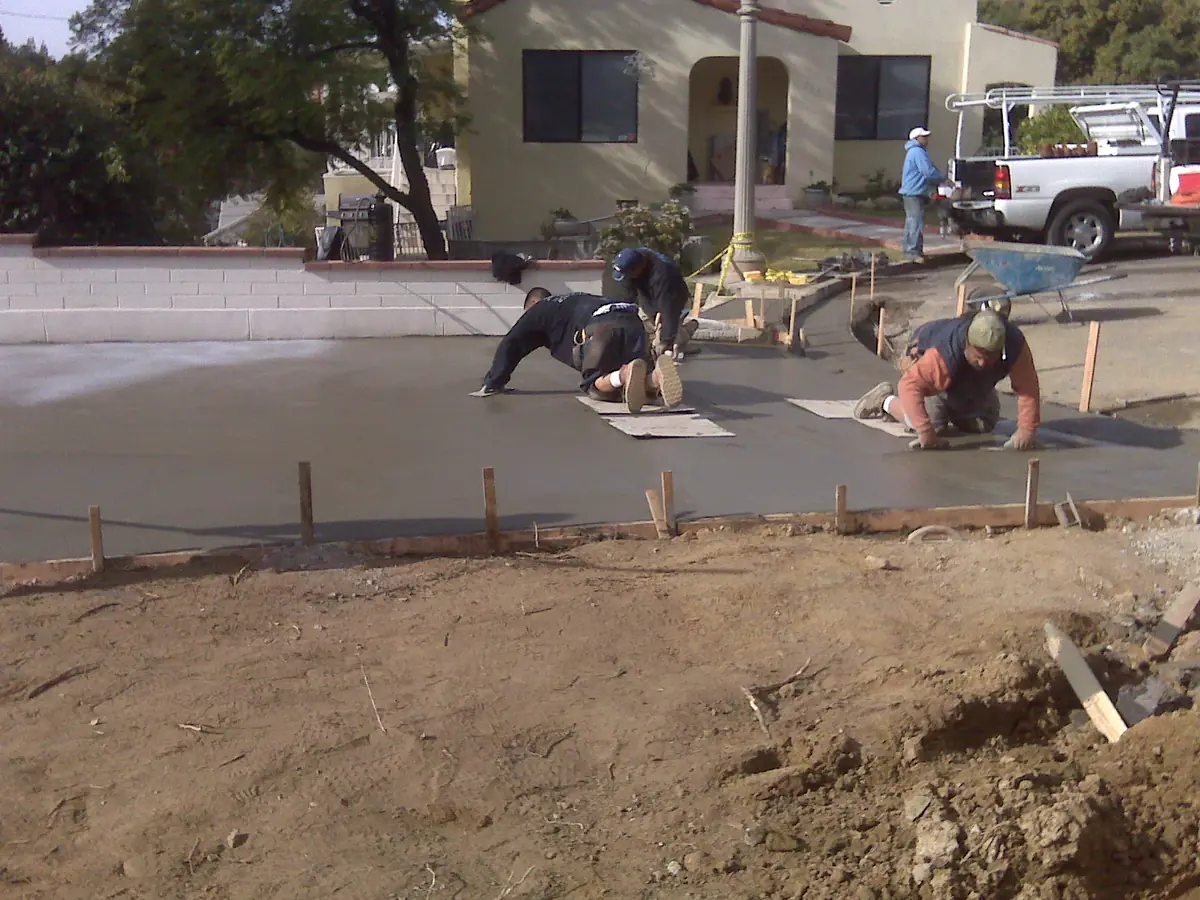
Get Your Concrete Poured In Three Easy Steps
Send A Message
Call, text or send the form with a few details, and photos if you have them. We reply the day we get it.
Step 1Free Estimate
We walk the site with you, measure, talk through finishes and drainage, and give you a price. No charge.
Step 2We Build It
Most jobs start about two weeks after you approve the estimate. We demo, form, pour, finish and haul off the mess.
Step 3
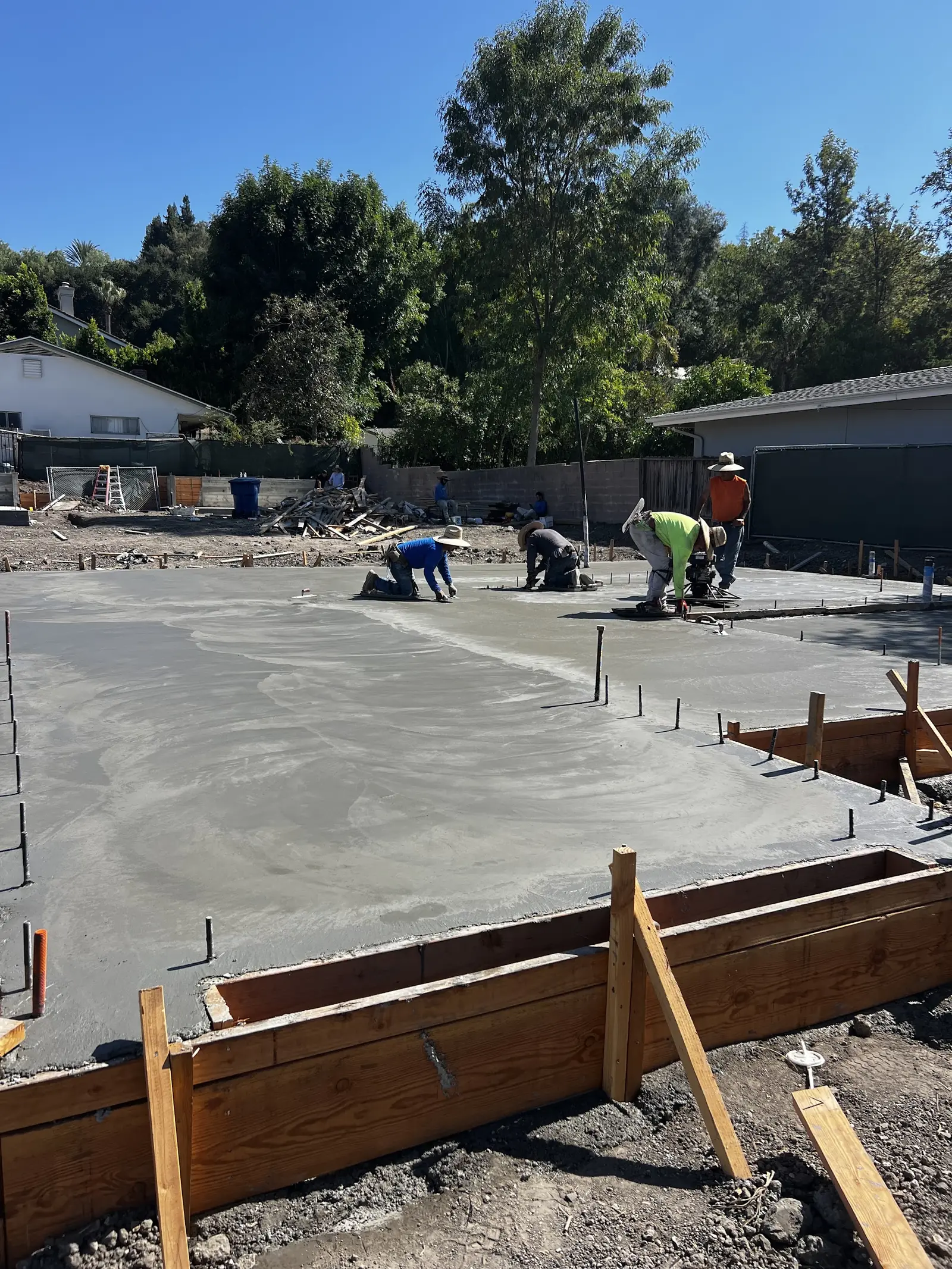
Ready For Your Concrete Project?
Family owned since 1999. California license 770901. Free estimates.