Stamped Concrete vs Pavers: Which Fits Your Driveway or Patio?
Short answer. Stamped concrete is one poured slab with the pattern pressed in, so there are no sand joints to weed and no loose units to shift. Pavers are separate units on sand that lift out and go back without a patch, which makes them the better pick when something under the surface may need digging up. The choice comes down to the look you want, the upkeep you will do and what the ground is likely to do.
We are a concrete contractor. Poured and stamped slabs are our trade, and that is the side of this comparison we know best. Pavers are still the better answer on some lots, and a contractor who tells you otherwise is selling. Here is how the two are built, how they compare on look, upkeep and repairs, and how to pick.
How each one is built
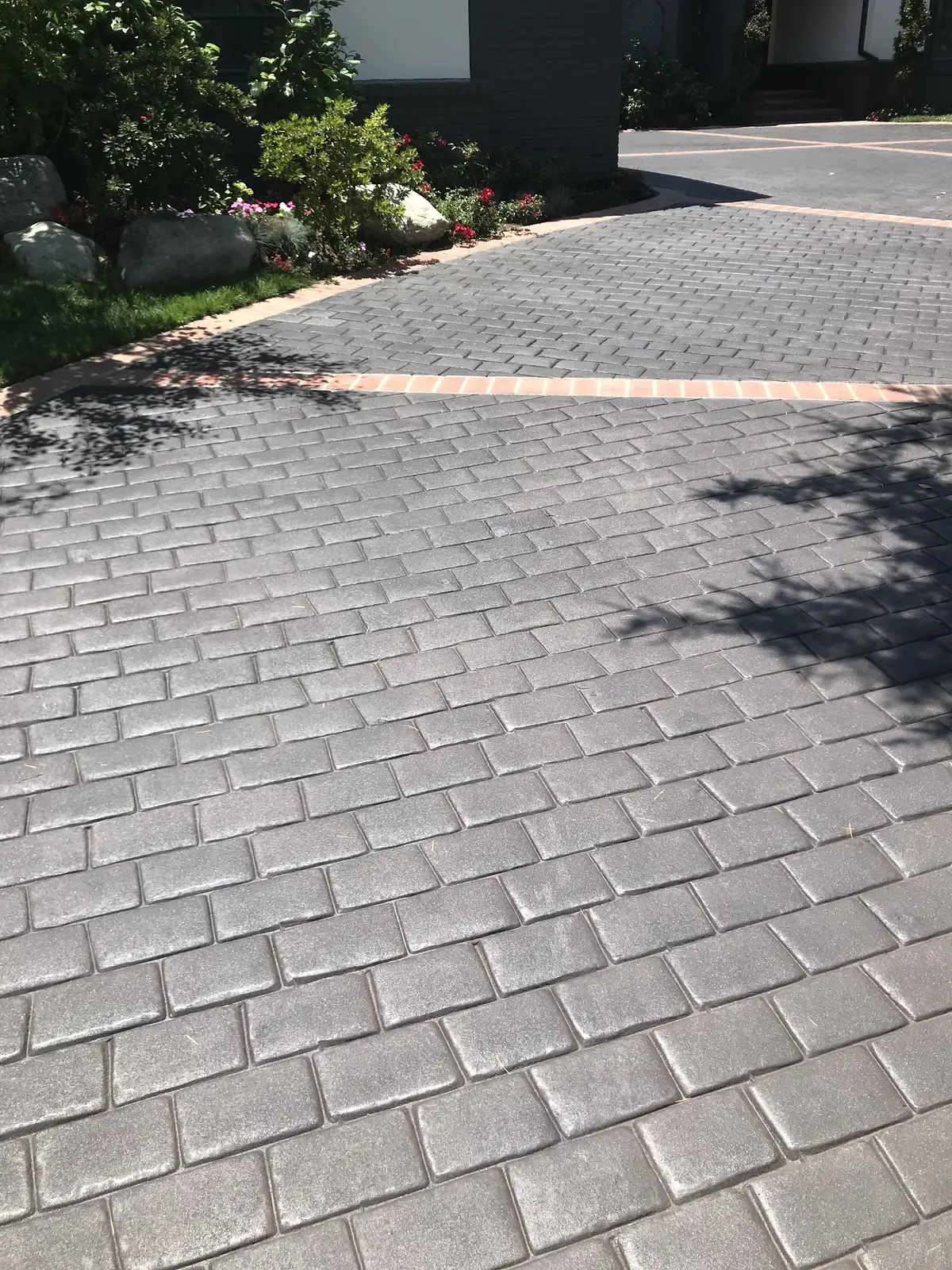
Stamped concrete is a single poured slab. Color goes into the mix or onto the surface, a pattern is pressed in with mats while the concrete is still soft, and sealer goes on once the slab has cured enough, on the timing the sealer maker gives for that product and the weather. Under the pattern it is an ordinary concrete slab, with control joints and the steel the site calls for.
Pavers are factory-made units laid one at a time. The Concrete Masonry and Hardscapes Association, the trade body that writes the installation guides, calls for pavers that meet the ASTM C936 standard, set on a thin layer of bedding sand over compacted aggregate base, with a deeper base under driveways than under patios and walks. An edge restraint holds the field together and sand fills the joints.
So one is rigid and one is flexible. That single difference explains almost everything in the table below.
Stamped concrete and pavers side by side
| Stamped concrete | Concrete pavers | |
|---|---|---|
| Look | One continuous surface in a stone, slate, cobble or plank pattern | Individual units with a sand joint around each one |
| Structure | One poured slab, colored, stamped and sealed | Separate units on bedding sand over compacted base |
| Ready to use | Once the slab has cured, on a wait set by the mix and the weather | Right after placement |
| Routine upkeep | Wash it, reseal when the sealer wears | Top up joint sand as it drops, pull weeds from the joints |
| Repairs | Hard to hide. A patch rarely matches | Lift the units, fix what is under them, relay |
| When the ground moves | Repair means cutting out and replacing a section, which shows | Units can shift or settle, and they can be lifted and reset |
| Best fit | Stable ground where you want one unbroken pattern | Roots, pipes or ground that may need opening up later |
That is a general comparison, and every site is different. What a stamped slab costs on your lot depends on its size, access, tear out, base, finish and drainage, and we price it at a free on-site estimate.
Where pavers win
Pavers win on anything that involves taking the surface apart later.
- Repairs. Concrete Network rates paver repair as simple and stamped concrete repair as complex. A damaged or sunken paver is swapped or reset. A repair to a stamped slab is hard to hide, because the color and pattern of a patch rarely match the original.
- Tree roots. Roots can lift any kind of paving. Pavers lifted by a root can be pulled up, the base regraded and the same units relaid. If the tree is a street tree in the City of Los Angeles, its roots cannot be trimmed without a Street Tree permit from the Bureau of Street Services.
- Utility access. The pavers association describes them as a zipper for underground repairs: units come out, the pipe is fixed, and the undamaged units go back with no patch. A trench through stamped concrete is a saw cut and a new strip of concrete that reads as a strip.
- No waiting. Pavers take traffic as soon as they are placed. A new slab needs time to cure before you walk or park on it, and how long depends on the mix and the weather.
Before you choose a surface, find out what runs under it. A sewer line, a water service or a large tree root under the driveway is the strongest argument for pavers.
Where stamped concrete wins
Stamped concrete wins on a stable site where you want the look without the joints.
- No loose units. There are no separate pieces, no edge restraint to fail and no bedding sand to wash out. Concrete Network notes that pavers can shift or settle over time and need releveling, a problem it ties to pavers that were not installed properly.
- No joint sand. A slab has a handful of control joints. A paver field has thousands of sand joints, and the sand has to be topped up to keep weeds out. The pavers association says to refill joints once the sand has dropped more than half an inch.
- Pattern and color. Mats come in large stone, slate, cobble and wood plank, and the same color can carry across steps, landings and borders as one piece. Our gallery shows what that looks like on finished jobs.
- Simple cleaning. A sealed slab hoses off. Upkeep comes down to washing it and resealing when water stops beading.
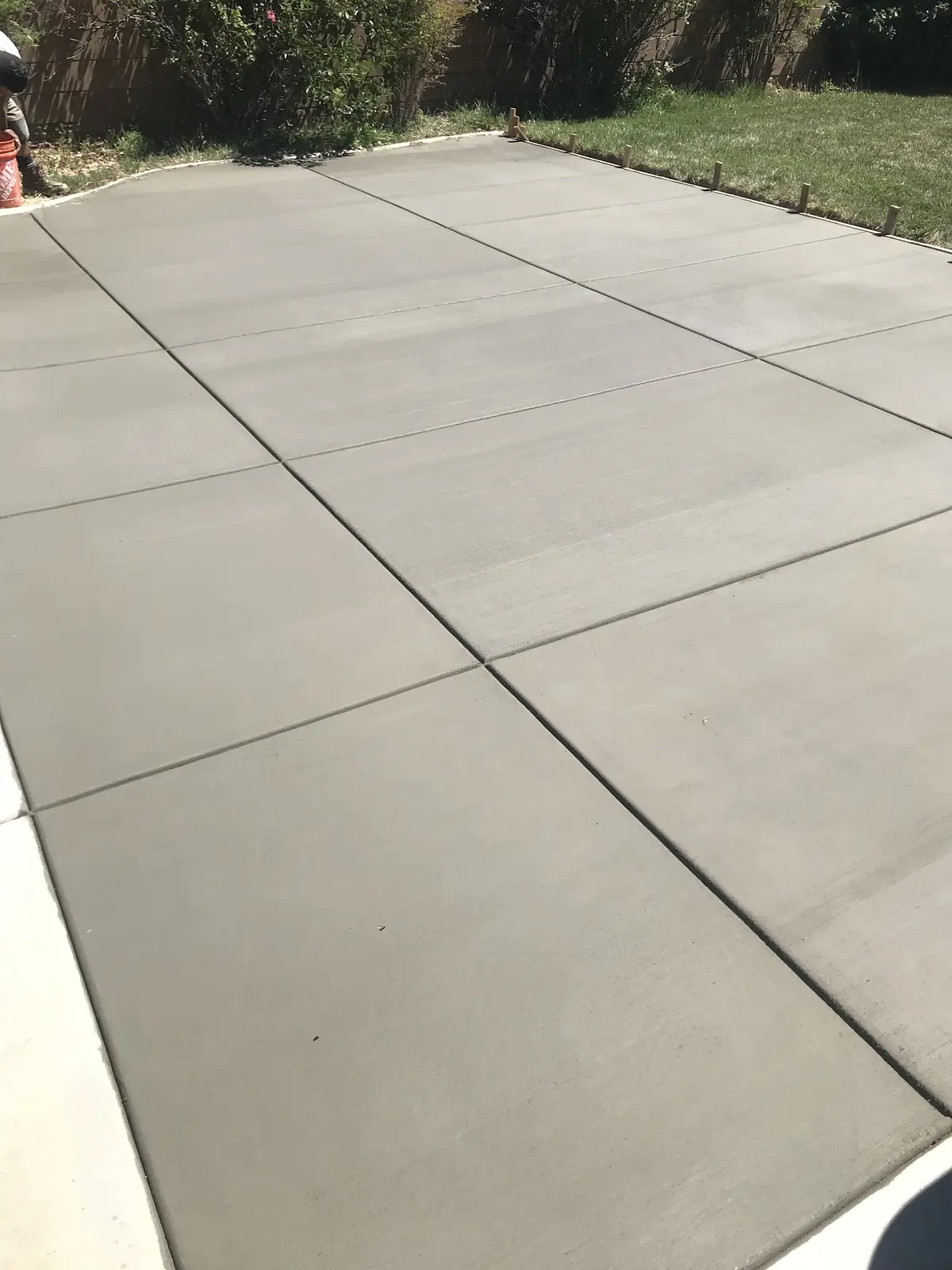
The honest weak point is repair. A slab is one piece, so fixing part of it means a patch or a replaced section that shows. On ground that keeps moving, pavers that can be lifted and releveled are the safer choice.
Which one fits your driveway or patio?
Match the surface to what the site is likely to do in the years ahead.
- A big tree close to the paving, or roots already lifting the old slab: pavers.
- Old pipes under the driveway that you expect to replace: pavers, or replace the pipe first and then pour.
- Stable ground, and you want a stone or plank look with clean borders: stamped concrete.
- Water ponding or soil washing out: fix the drainage first. Neither surface does well over a wet base.
- A [pool deck](/services/pool-decks): either works. With stamped concrete, pick a lighter texture and a sealer with traction grit.
- The tightest budget: a plain broom finished slab, which skips the color and pattern work. A stamped or colored border is the usual first step up from there.
Where Ikon fits in
We pour stamped concrete for driveways and patios across the San Fernando and Santa Clarita valleys, and we will tell you at the estimate if your site is a better fit for pavers. Estimates are free: call or text (818) 464-5763, or send a message.
More questions
Not by a rule you can count on. Concrete Network's cost guide shows the two ranges overlapping. A one-pattern, one-color stamped slab sits at the simpler end and multi-pattern, hand-colored work does not, and size, access, tear out, base and drainage move either one. We price stamped concrete for your lot at a free on-site estimate.
Repairs. A damaged section, or a cut made to reach a pipe, is hard to patch to match the original color and pattern. The sealer also has to be kept up, which pavers do not strictly need.
Not by any margin the publishers agree on. Concrete Network gives the two about the same life when they are maintained. How either one holds up on your lot comes down to the base under it, the drainage and the upkeep.
Do not assume so. In the City of Los Angeles the driveway approach sits in the public right of way and is built under a Class A permit to City Standard Plan S-440-4. Ask the Bureau of Engineering, or your own city's public works counter, what surface it will accept there before you plan a pattern to the curb.
Related services
Written by the Ikon Concrete Design team in Sylmar, California. Ikon Concrete Design is a family owned concrete contractor run by Gilbert Rico since 1999, California license770901. This article is general information. Codes, fees and prices change, so check with your building department and get an on-site estimate before you plan around a number.
Concrete contractor in Santa Clarita and the San Fernando Valley
Family OwnedSince 1999
California contractor license 770901. C-8 Concrete and B General Building. Free estimates.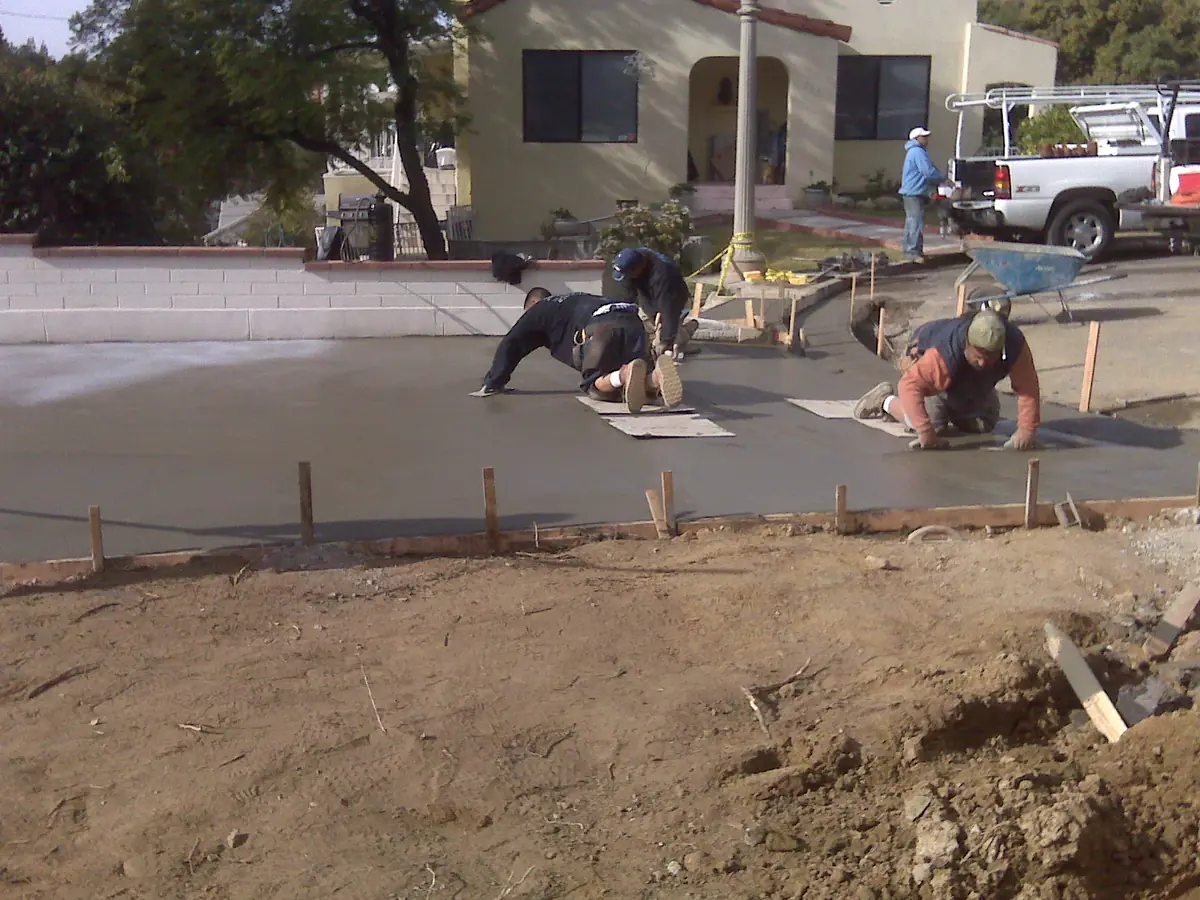
Get Your Concrete Poured In Three Easy Steps
Send A Message
Call, text or send the form with a few details, and photos if you have them. We reply the day we get it.
Step 1Free Estimate
We walk the site with you, measure, talk through finishes and drainage, and give you a price. No charge.
Step 2We Build It
Most jobs start about two weeks after you approve the estimate. We demo, form, pour, finish and haul off the mess.
Step 3
Ready For Your Concrete Project?
Family owned since 1999. California license 770901. Free estimates.